Miniature kitchenware brings life, realism, and storytelling to a dollhouse. Among all the tiny accessories, the miniature teapot often becomes a centerpiece. It reflects the personality of the miniature home and demonstrates the skill of the maker.
| Product | Buy |
|---|---|
| Air Dry Clay |

|
| Clay Tools |
|
| Clay Shaper Tool |
|
| Magnets |
|
| Jewellery Materials |
|
| Acrylic Colours |
|
| Paint Brushes |
|
Creating convincing miniature kitchen items requires choosing the right materials, understanding their properties, and knowing when to combine them. In this guide, we will explore the most important materials used to craft miniature teapots and dollhouse kitchenware, along with their advantages and best uses.
1. Polymer Clay: The Most Versatile Material
Polymer clay is one of the most popular materials for miniature kitchenware. It is easy to shape, widely available, and ideal for beginners and professionals alike. Polymer clay can be molded into teapots, cups, bowls, plates, and decorative kitchen items. Once baked in a household oven, it becomes durable and lightweight.
One of the greatest strengths of polymer clay is its flexibility in finishing. It can be painted, sanded, glazed, or textured to resemble ceramic, porcelain, or even metal. Artists often mix colors to imitate realistic pottery tones or create decorative patterns. For miniature teapots, polymer clay allows precise shaping of the spout, handle, and lid, which are critical details for realism.
2. Air-Dry Clay: A Simple Alternative
Air-dry clay is another good option, especially for those without access to an oven. As the name suggests, it hardens naturally when exposed to air. This makes it convenient for hobbyists who want a simple and safe material to work with.
However, air-dry clay tends to be more fragile than polymer clay and may shrink slightly while drying. For this reason, it is best suited for decorative kitchen items rather than pieces that require thin, delicate parts. Still, with proper sealing and painting, air-dry clay can produce beautiful miniature teapots and jars.
3. Wood: Warmth and Authentic Craftsmanship
Wood is an excellent material for miniature kitchen accessories, especially for items like trays, cutting boards, shelves, and even rustic teapots. It gives warmth and authenticity to a dollhouse kitchen scene. Thin sheets of balsa wood or basswood are easy to cut and sand, making them perfect for small-scale projects.
Wood also works well when combined with other materials. For example, a wooden base can be paired with metal handles or clay decorations to create unique mixed-media pieces. When sealed with varnish or oil, miniature wooden items gain durability and a realistic finish.
4. Metal: Realism and Strength
Metal is often used for miniature cookware to achieve a realistic appearance. Thin sheets of aluminum, brass, or copper can be shaped into teapots, kettles, or pans. Metal provides strength and a natural shine that is difficult to replicate with other materials.
While working with metal requires more tools and experience, the results are impressive. A small copper teapot or stainless steel pot instantly enhances the authenticity of a dollhouse kitchen. Metal is especially suitable for modern or traditional kitchen themes where cookware plays an important visual role.
5. Resin: Perfect for Smooth and Shiny Finishes
Resin is commonly used to create glossy, porcelain-like surfaces in miniatures. It is poured into molds and hardens into a strong, smooth material. Resin works well for teapots, plates, cups, and decorative containers.
One of its main advantages is consistency. Using molds allows creators to produce identical pieces, which is useful when making sets of kitchenware. Resin can also be tinted, painted, or coated with gloss varnish to achieve realistic ceramic finishes.
However, working with resin requires careful mixing, ventilation, and patience while waiting for it to cure. Despite these challenges, it remains a favorite material for professional miniature artists.
6. Paper and Cardboard: Lightweight and Detailed
Paper may seem simple, but it is surprisingly useful in miniature crafting. Thick cardstock can be layered and shaped into bowls, trays, or even teapots. When coated with glue, varnish, or resin, paper becomes stronger and more durable.
Paper is especially useful for decorative kitchen elements such as labels, packaging, recipe books, and patterned trays. It also works well as a base structure covered with clay or paint. Because it is inexpensive and easy to cut, paper is ideal for beginners experimenting with miniature design.
7. Glass and Transparent Materials
For certain miniature kitchen items, transparency is essential. Small glass beads, plastic domes, or clear resin can simulate glass teapots, jars, or containers. These materials help create realistic storage scenes with visible contents like tea leaves, sugar, or spices.
Transparent materials add visual depth to a dollhouse kitchen and create a more believable environment. They are often combined with other materials such as metal lids or wooden bases to complete the piece.
8. Paints, Glazes, and Finishing Materials
No miniature kitchenware is complete without finishing touches. Acrylic paints are widely used because they dry quickly, adhere to many surfaces, and come in a wide range of colors. They allow artists to add patterns, shading, or aged effects.
Gloss varnish helps mimic ceramic or porcelain surfaces, making miniature teapots look realistic and polished. Matte varnish, on the other hand, works well for wooden or rustic pieces. Metallic paints can simulate copper, steel, or brass, especially when real metal is not used.
Finishing materials often determine whether a miniature looks handmade or truly lifelike. Careful painting, sealing, and detailing can transform simple materials into convincing dollhouse kitchen treasures.
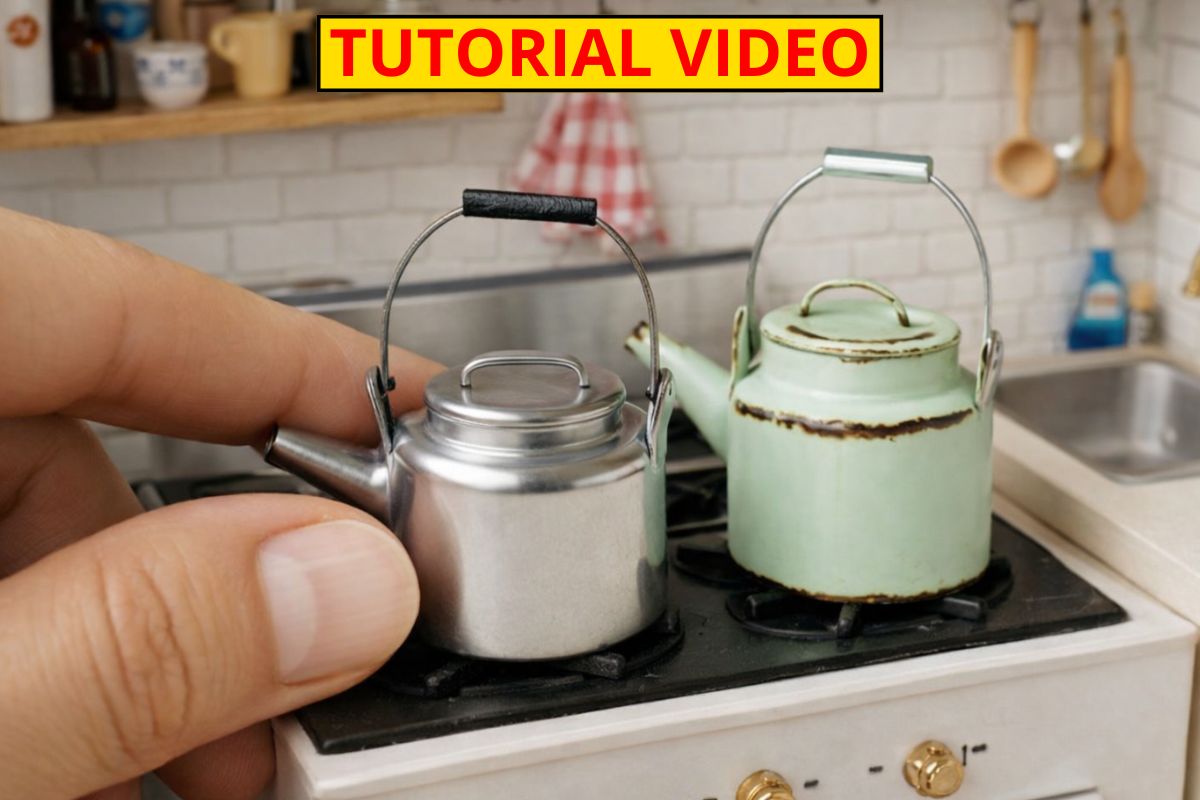
You can watch this video for some useful ideas on making miniature kitchenware and teapots for a dollhouse. It explains simple techniques and materials that can help you create more realistic and beautiful pieces.
Conclusion
Crafting miniature teapots and dollhouse kitchenware is a creative process that blends artistry with material knowledge. Polymer clay offers flexibility and ease, wood brings warmth and authenticity, metal adds realism, and resin provides professional finishes. Paper, glass-like materials, and paints all contribute essential details that enhance the final result.
Choosing the right material depends on the style of the dollhouse, the tools available, and the skill level of the maker. Many miniature artists combine several materials to achieve the best effect. With practice and experimentation, even simple materials can produce stunning miniature kitchen scenes that feel alive and inviting.
Ultimately, the beauty of miniature crafting lies in the small details. A carefully shaped teapot, a glossy finish, or a realistic texture can turn a tiny object into a storytelling piece. By selecting the right materials and mastering their use, anyone can create charming miniature kitchenware that adds personality and warmth to a dollhouse.