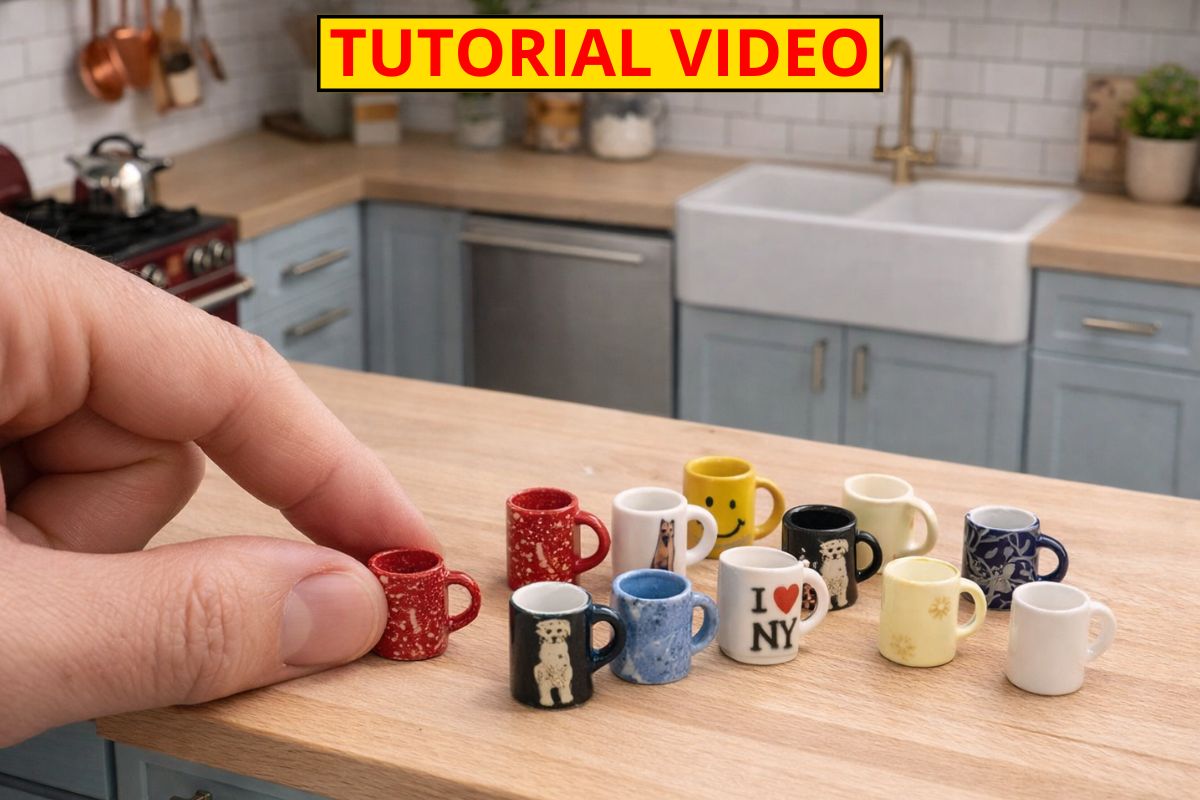
Creating miniature coffee cups made from paper is a fascinating craft that combines creativity, patience, and precision. These tiny items are often used in dollhouses, miniature kitchens, dioramas, and creative displays.
Although they may look simple, making realistic miniature paper cups requires a set of important skills. Whether you are a beginner or an experienced miniature maker, mastering these skills will greatly improve the quality and realism of your work.
Precision Cutting
One of the most important skills when making miniature paper coffee cups is precision cutting. Because miniatures are very small, even a tiny mistake can ruin the final result. Using sharp scissors or a craft knife allows you to cut clean edges and maintain the correct proportions.
It is also important to cut slowly and carefully. Rushing can cause uneven edges or inaccurate shapes. Many miniature artists use templates to ensure the cup walls and bases are perfectly shaped. Practicing precise cutting will help your miniature cups look professional and realistic.
Attention to Scale and Proportion
Miniature crafting requires a good understanding of scale and proportion. A coffee cup that is slightly too tall or too wide can look unrealistic when placed inside a dollhouse or miniature café.
Most miniature scenes use common scales such as 1:12 or 1:24. Before starting your project, it is helpful to know the scale you are working with. Measuring carefully and comparing with real objects will help you maintain accurate proportions and achieve a believable miniature effect.
Paper Shaping Techniques
Transforming flat paper into a realistic coffee cup requires the ability to shape and curve paper properly. This skill is essential because a cup must have a smooth cylindrical form.
Miniature artists often roll the paper around a small tool such as a toothpick, needle, or thin rod to create a natural curve. Learning how to gently bend paper without creasing it will make your miniature cups look smooth and realistic.
With practice, you can also create details such as cup rims, lids, and handles using simple shaping techniques.
Clean Gluing and Assembly
Another key skill is clean gluing and careful assembly. Because the pieces are extremely small, too much glue can easily ruin the appearance of your miniature cup.
Using a toothpick or fine brush to apply glue allows better control. Applying only a tiny amount helps keep edges clean and prevents the paper from becoming wrinkled or soggy.
Patience during the assembly stage is very important. Holding pieces in place until the glue dries ensures a neat and sturdy miniature.
Surface Finishing and Decoration
To make your miniature coffee cups look more realistic, surface finishing and decoration are essential. Many paper cups in real life have printed logos, colors, or patterns.
Miniature artists often paint their cups, add printed textures, or use tiny labels to simulate coffee shop branding. Even simple shading techniques can add depth and realism.
Paying attention to these small details can transform a simple paper cup into a convincing miniature prop.
Patience and Practice
Finally, one of the most valuable skills in miniature crafting is patience. Miniatures require time, steady hands, and repeated practice. Your first few paper coffee cups may not be perfect, but each attempt will improve your technique.
Over time, you will develop better control, sharper precision, and more creative ideas. With dedication, you can create beautiful miniature coffee cups that look surprisingly realistic despite their tiny size.