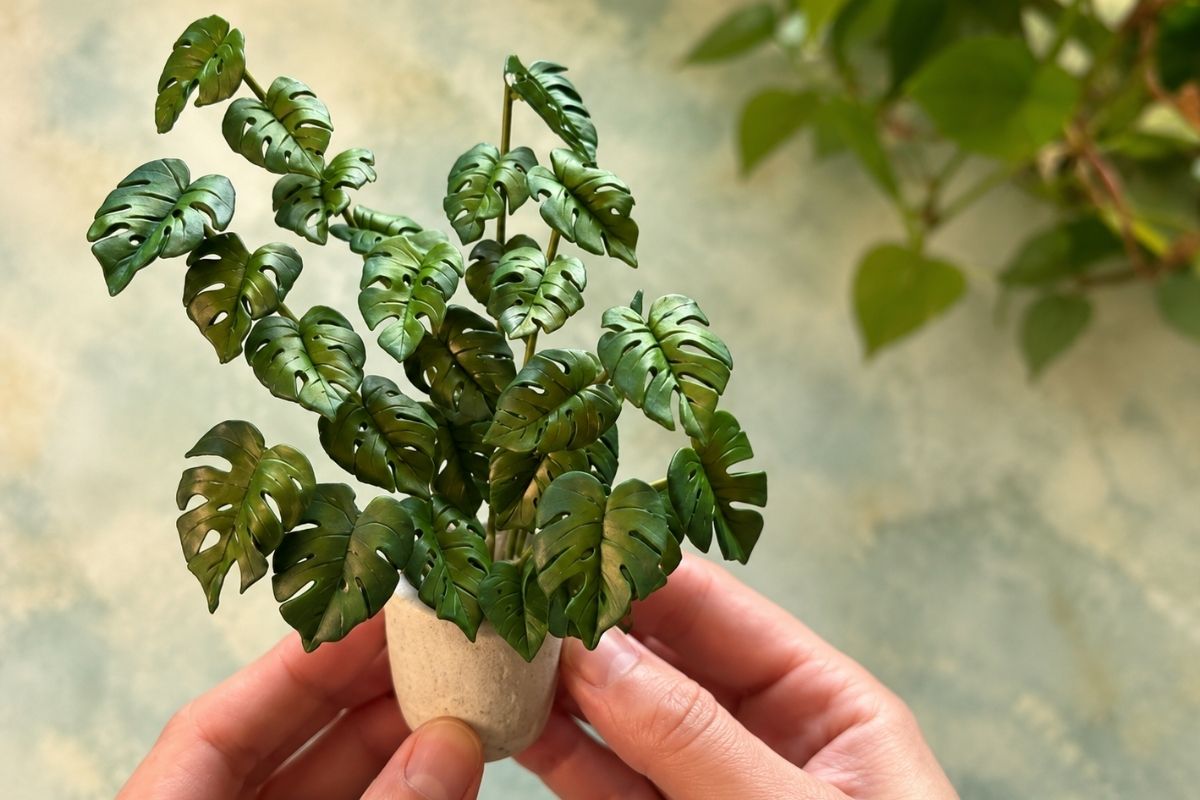
Monstera deliciosa, with its dramatic split leaves, has become one of the most beloved houseplants in the world — and it’s just as popular in miniature form. Whether you’re building a dollhouse jungle corner or adding greenery to a fairy garden, a miniature Monstera brings instant charm and a touch of the tropics to any small-scale scene.
Why Monstera Works So Well in Miniature
The plant’s signature fenestrated (split) leaves are what make it so recognizable, even at a tiny scale. Because the leaf shape is so distinctive, even a simplified miniature version reads immediately as “Monstera” to anyone who sees it — which is part of why it’s such a popular subject for miniaturists and crafters alike.
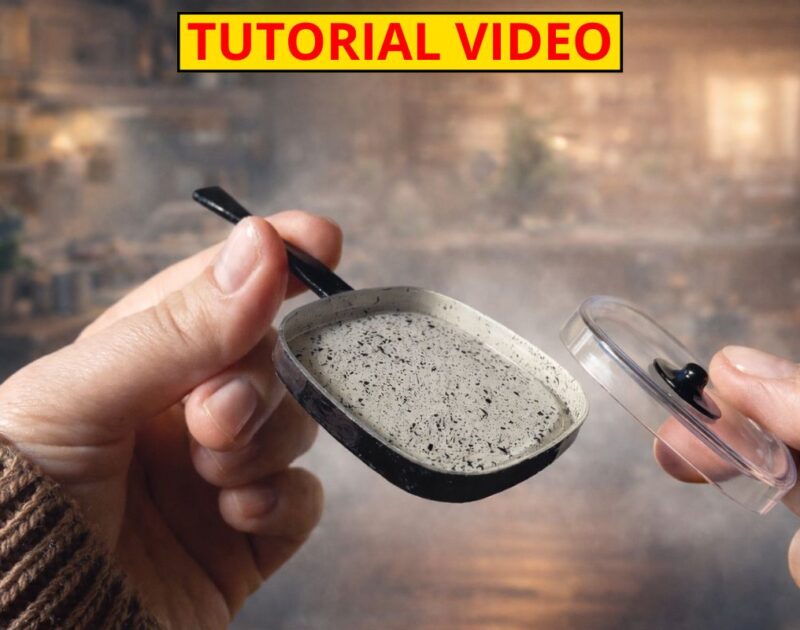
For the best understanding, we recommend reading the information first before watching the video. Prefer a visual guide?
What You’ll Need to Get Started
Most miniature Monstera projects rely on a handful of accessible materials: a pliable modeling medium for the leaves (polymer clay, air-dry clay, or paper are common choices), fine wire for stems and leaf veins, green paint or clay tints in a few shades, and a small pot or planter to display the finished piece. A few basic tools — something for shaping and smoothing, plus a fine tool for adding vein texture — round out the essentials.
Getting the Scale Right
One of the most important basics is choosing the right scale before you begin. Dollhouse miniatures typically follow a 1:12 scale, meaning your leaves should be proportioned accordingly — usually just a centimeter or two across, depending on how mature you want the plant to look. Mixing leaf sizes, from small unfurled buds to larger mature leaves, adds realism and helps the plant feel like it’s actively growing.
Color and Texture Tips
Real Monstera leaves aren’t a flat, uniform green — they have depth, with darker veins and subtle variation across the leaf surface. Layering two or three shades of green, rather than relying on a single color, goes a long way toward making a miniature leaf look convincing. Adding a glossy finish can also mimic the natural sheen of the real plant’s foliage.
Displaying Your Miniature Monstera
Once finished, the little plant can be arranged in a miniature pot, hung as a trailing vine, or placed as part of a larger miniature garden scene. Grouping it with other small tropical elements — like a tiny fern or a woven basket planter — helps build a cohesive, lush miniature environment.
Whatever technique you choose to bring your miniature Monstera to life, focusing on proportion, layered color, and that unmistakable split-leaf silhouette will help your finished piece capture the charm of the real thing.
we came across a wonderfully talented maker online whose miniature Monstera came out looking incredibly lifelike. Her video walks through her approach step by step, and it’s well worth a watch if you want to see these techniques in action — it might give you some great ideas to bring into your own miniature projects.