Choosing the right scale is one of the most important decisions when building a dollhouse. Whether you’re a beginner or an experienced miniature creator, understanding the difference between 1:12 scale and 1:24 scale will directly impact your project’s realism, cost, and complexity.
What Is Dollhouse Scale?
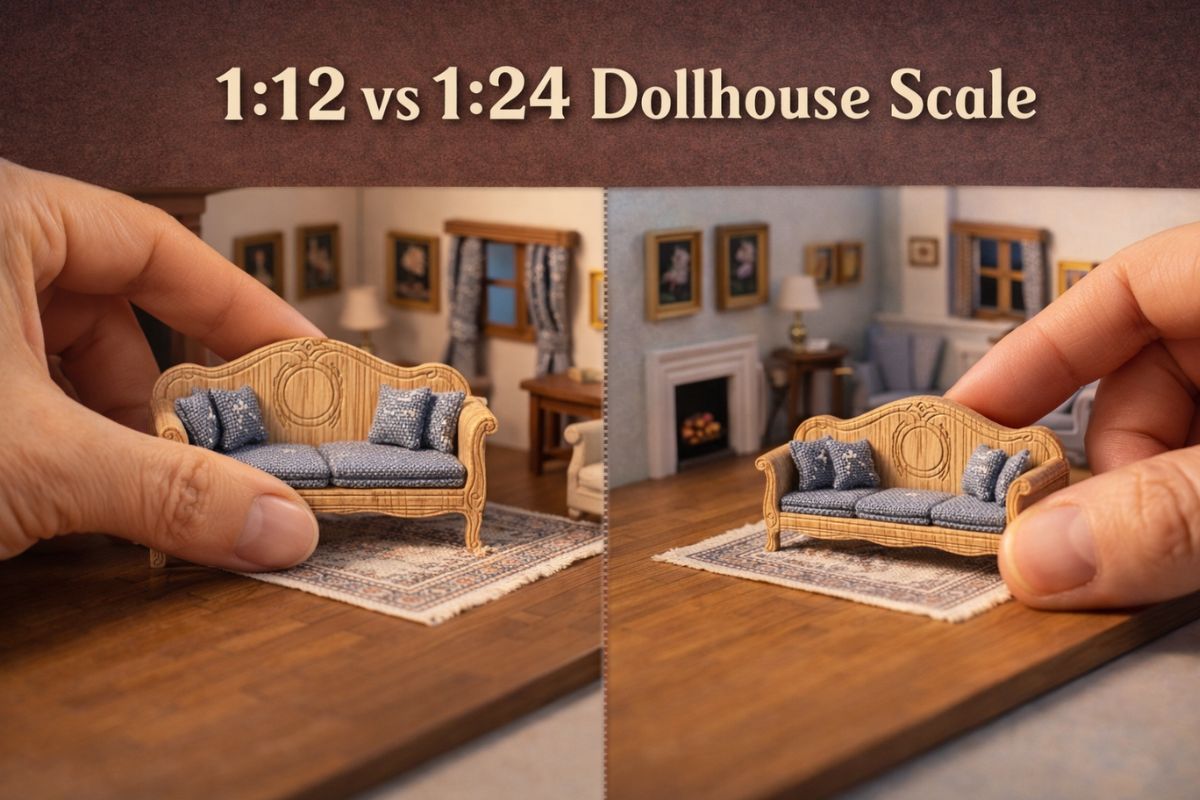
Dollhouse scale refers to the ratio between a real-life object and its miniature version.
- 1:12 scale means 1 inch equals 12 inches (1 foot) in real life.
- 1:24 scale means 1 inch equals 24 inches (2 feet) in real life.
The scale determines the size of furniture, accessories, and even how detailed your miniature project can be.
1:12 Scale Dollhouse — The Industry Standard
The 1:12 scale, also known as “one-inch scale,” is the most popular choice in dollhouse building.
Advantages of 1:12 Scale
1. High Level of Detail
This scale allows for extremely realistic miniatures. You can add fine textures, tiny accessories, and even working elements like lights or opening drawers.
2. Beginner-Friendly
Because the pieces are larger, they are easier to cut, assemble, and paint—making it ideal for beginners.
3. Easy to Find Supplies
Most dollhouse furniture, kits, and tools are made for 1:12 scale, so you’ll have a wide range of options available.
Disadvantages of 1:12 Scale
- Requires more physical space
- Higher cost due to size and materials
- Longer build time for detailed projects
1:24 Scale Dollhouse — Compact and Efficient
The 1:24 scale, also known as “half scale,” is exactly half the size of 1:12.
Advantages of 1:24 Scale
1. Space-Saving
Perfect for small homes or limited display areas. You can build more rooms in less space.
2. Lower Cost
Uses less material, which makes it more budget-friendly.
3. Faster Projects
Smaller size means quicker builds, especially for simple designs.
Disadvantages of 1:24 Scale
- More difficult to work with due to tiny pieces
- Limited availability of accessories compared to 1:12
- Less visible detail
Key Differences: 1:12 vs 1:24 Scale
| Feature | 1:12 Scale | 1:24 Scale |
|---|---|---|
| Size | Larger | Smaller |
| Detail Level | Very high | Moderate |
| Ease of Building | Easier | More challenging |
| Cost | Higher | Lower |
| Space Requirement | More space needed | Compact |
| Availability | Widely available | Limited options |
Which Is the Best Scale for Dollhouse Building?
The answer depends on your goals:
- Choose 1:12 scale if you want realism, detail, and a traditional dollhouse experience.
- Choose 1:24 scale if you prefer compact builds, lower costs, and faster projects.
If you are a beginner, 1:12 scale is usually the best starting point due to its ease of use and availability of materials.
Tips for Choosing the Right Scale
- Consider your space: Larger scales need more room.
- Think about your skill level: Smaller scales require more precision.
- Set a budget: Bigger projects cost more.
- Plan your style: Highly detailed designs work better in 1:12.
Conclusion
When comparing 1:12 vs 1:24 dollhouse scale, there is no one-size-fits-all answer. Each scale offers unique advantages depending on your needs, space, and creative goals.
If your priority is realism and detail, go with 1:12 scale. If you want efficiency and compact design, 1:24 scale is the better option.
Ultimately, the best scale for dollhouse building is the one that fits your vision and makes the building process enjoyable.