If you’ve ever mixed pieces from different miniature collections and had them look “off” sitting next to each other, you’ve run into the most common problem in the miniature-making world: scale confusion.
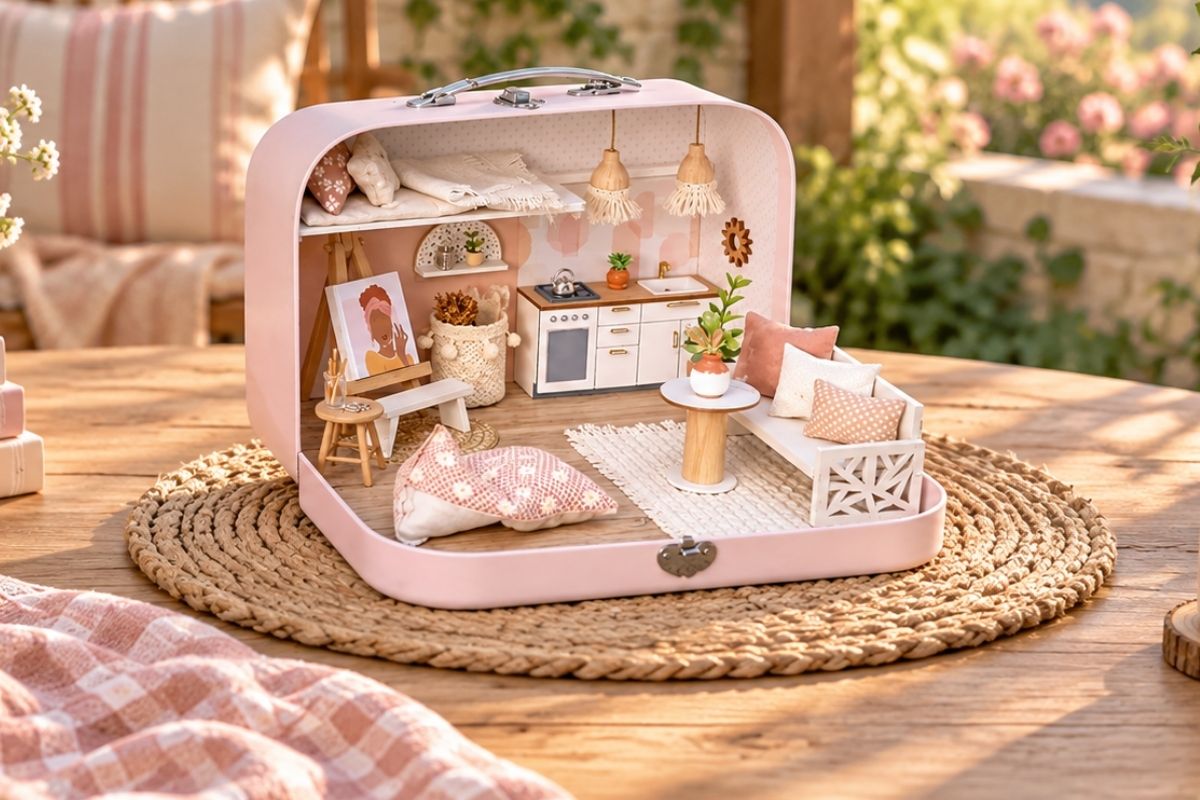
Whether you’re building dollhouse furniture, styling a miniature room box, or shopping for tiny props to complete a scene, understanding scale is the difference between a display that looks believable and one that looks like a mismatched toy bin.
This guide walks through the mistakes miniature makers and collectors run into most often when working with different scales, and simple ways to avoid them.
1: Not Checking the Scale Before Buying
It’s easy to fall in love with a miniature piece online and add it to your cart without checking its listed scale. The problem is that two items can look nearly identical in a photo and still be built for completely different scales — one might be 1:12, another 1:6, and once they arrive, they simply won’t sit together the way you imagined.
How to avoid it: Always look for the scale ratio in the product description before buying, and if it isn’t listed, ask the seller directly. Keep a note of which scale your main collection or project uses so you can compare quickly.
2: Mixing 1:12 and 1:6 Pieces in the Same Scene
These are the two most popular miniature scales, and they get mixed up constantly. In 1:12 scale, one inch equals one foot, making it the traditional dollhouse standard. In 1:6 scale, items are twice as large, closer to the size used for fashion dolls. A 1:6 chair next to a 1:12 table will look wildly oversized, breaking the illusion instantly.
How to avoid it: Pick one scale for a given project and stick to it throughout. If you want to combine pieces from both scales, dedicate separate scenes or rooms to each rather than blending them.
3: Assuming All “Miniature” Labels Mean the Same Size
Not every product labeled “miniature” or “mini” follows a standard scale at all. Some items, especially craft accessories and decorative pieces, are simply “small” rather than built to a true architectural ratio. This is a common trap for beginners who assume every miniature product will automatically match their dollhouse.
How to avoid it: Look past the word “miniature” and check for an actual measurement or scale ratio. If only dimensions are given, do the math yourself by comparing them to a real-world object at full size.
4: Ignoring Scale When Designing or Cutting Your Own Pieces
When making furniture from scratch, it’s tempting to eyeball proportions based on what “looks right,” rather than working from accurate measurements. This often results in pieces that seem fine on their own but feel noticeably too big or too small once placed inside a finished room or house.
How to avoid it: Work from a template or a consistent measurement system from the very start of the project, and double-check key dimensions like height and width against real furniture proportions divided by your chosen scale factor (for example, divide real-life inches by 12 for 1:12 scale).
5: Forgetting That Scale Affects More Than Furniture
Scale mistakes aren’t limited to furniture. Miniature food, plants, figurines, and accessories all need to match the scale of the room or house they’re placed in. A beautifully made miniature loaf of bread can completely ruin a scene if it’s sized for the wrong scale relative to the table it sits on.
How to avoid it: Treat every accessory the same way you treat furniture — check its scale before adding it to a finished piece, not after.
6: Not Accounting for Wall and Door Proportions
Builders sometimes focus so much on furniture scale that they forget the structure itself — walls, doors, and windows — needs to follow the same ratio. A dollhouse built loosely “by eye” can end up with doors too narrow for the furniture meant to pass through them, or ceilings that feel cramped once populated.
How to avoid it: Plan the structure’s dimensions first, using your chosen scale as the foundation, then design or select furniture to fit those measurements — not the other way around.
Final Tips for Staying Consistent Across Scales
- Keep a simple reference chart of common miniature scales (1:12, 1:6, 1:24, 1:48) and their real-world equivalents.
- Measure twice before cutting or buying — scale mistakes are much easier to prevent than to fix afterward.
- If you enjoy working in more than one scale, keep separate storage bins or project folders labeled by scale to avoid accidentally mixing pieces.
- When in doubt, compare a new piece to something you already know the scale of before committing to a purchase or build.
Getting comfortable with scale takes a little practice, but once it clicks, it becomes second nature — and it’s one of the quickest ways to take a miniature project from “cute attempt” to genuinely realistic.