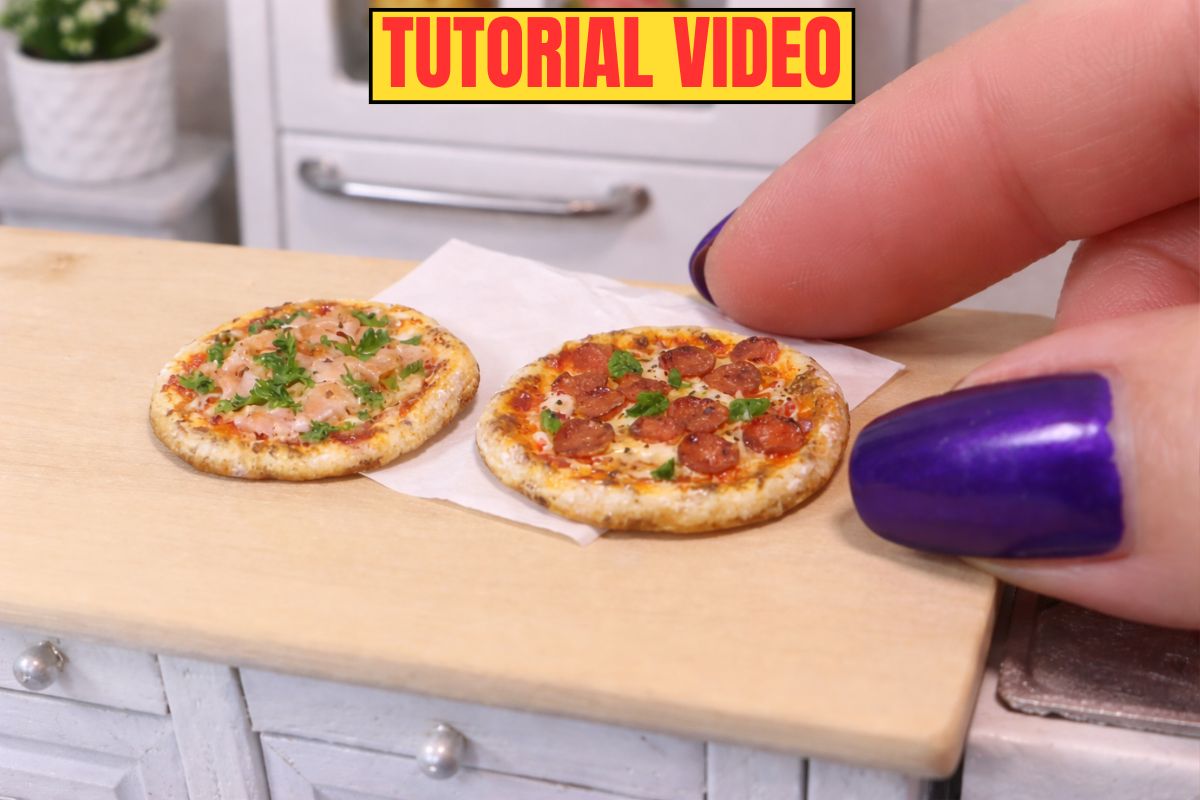
Hey guys! For today’s miniature food tutorial, we’re making realistic pizza from polymer clay. For this project, I created two different designs: one pizza topped with classic pepperoni and fresh basil, and another with ham and rucola.
| Product | Buy |
|---|---|
| Air Dry Clay |

|
| Clay Tools |
|
| Clay Shaper Tool |
|
| Magnets |
|
| Jewellery Materials |
|
| Acrylic Colours |
|
| Paint Brushes |
|
Pizza is one of those miniature foods that instantly feels familiar and fun, which is why so many people choose it as one of their very first miniature projects.
Miniature food is a popular part of the miniature hobby because it combines creativity, detail, and storytelling. Pizza, in particular, is a great subject because it allows for natural textures and small imperfections that actually make the final piece look more realistic.
Slightly uneven crusts, irregular toppings, and varied colors all help bring the miniature to life. This makes pizza an enjoyable and stress-free project for beginners, while still being interesting for more experienced miniature artists.
This pizza was made in 1:12 scale, which is the standard size for dollhouses. It fits perfectly into miniature kitchens, dining rooms, cafés, or restaurant scenes. One of the best things about miniature food, however, is how easy it is to adapt.
The same idea can be resized to work with other dolls and figures such as Barbie, Monster High dolls, LPS, BJDs, and many more. Adjusting the scale allows you to use the same design in different miniature worlds.
What makes miniature pizza especially appealing is its versatility. Classic combinations like pepperoni and basil create a traditional look, while toppings such as ham and rucola add a more modern, gourmet touch.
These small choices can completely change the mood of a miniature scene and help tell a story. A whole pizza can suggest a shared meal or a party, while slices can create a more casual, everyday setting.
Miniature food is not just about the object itself, but also about how it enhances a scene. A tiny pizza on a table can bring warmth and realism to a dollhouse, making the space feel lived-in and inviting. It can also be used for photography, displays, or social media content, where realistic details really stand out.
Polymer clay is a favorite material for miniature food because it is durable and easy to work with. Once finished, the miniature becomes strong enough for long-term display or gentle play, making it ideal for collectors and dollhouse enthusiasts alike. Its flexibility also allows artists to explore different styles, from highly realistic pieces to more playful designs.
This blog post focuses on inspiration rather than technical steps, as the full process is shown in the video tutorial. Watching the technique in action makes it easier to understand how the miniature comes together without overloading the written explanation.
Whether you are new to miniatures or already experienced, making miniature pizza is always a rewarding project. It’s creative, customizable, and instantly recognizable. I hope this project inspires you to experiment with your own designs and add a delicious miniature touch to your dollhouse scenes. 🍕✨