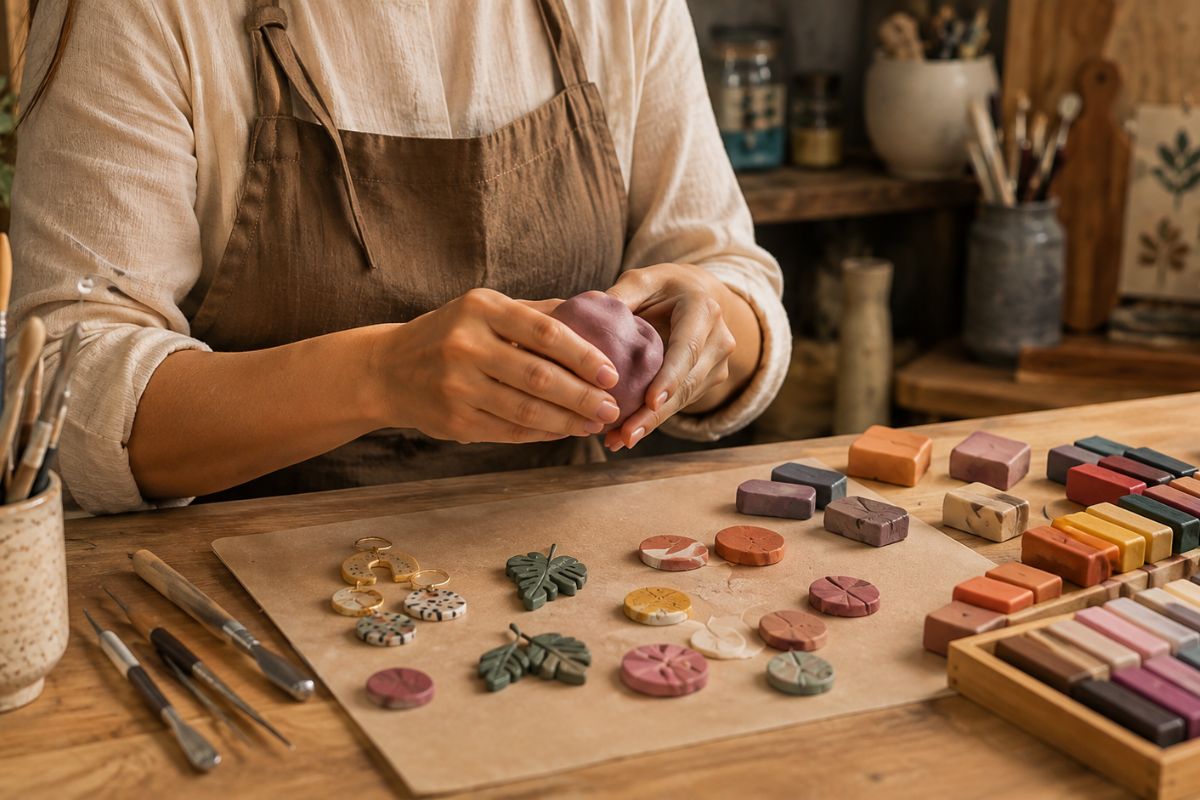
If you’ve ever admired a handmade polymer clay necklace and wondered how it was made, the answer usually starts with one simple decision: choosing the right clay. Not all polymer clays behave the same way, and picking the wrong one can mean cracked pendants, faded colors, or beads that never quite hold their shape.
Whether you’re making delicate floral pendants, chunky statement beads, or tiny charm necklaces, the clay you start with sets the tone for everything else.
In this guide, we’ll break down the most popular polymer clay brands used for necklace-making, what makes each one different, and how to choose the best option for your project.
What Makes a Clay “Good” for Necklaces?
Before comparing brands, it helps to know what qualities actually matter when a piece of clay is destined to become a wearable pendant or bead. Necklaces are handled often, hang under their own weight, and are sometimes exposed to skin oils, moisture, or accidental knocks — so the clay needs to hold up to daily wear, not just look good fresh out of the oven.
A few qualities to look for:
- Strength after baking. Necklace pendants are thin and often have holes drilled for jump rings, so the cured clay needs to resist snapping.
- Color richness and clarity. Necklaces are meant to be looked at up close, so vibrant, true-to-package colors matter more here than in larger projects.
- Workability. Soft, pliable clay is easier to shape into fine details like petals, tiny dots, or thin wire-like coils.
- Low shrinkage. Some clays shrink slightly when baked, which can distort delicate shapes or throw off symmetry in matching pendant sets.
Popular Clay Brands for Necklace-Making
Premo! Sculpey
Premo is a favorite among jewelry makers because it strikes a good balance between softness and strength. It holds fine details well, which makes it ideal for textured pendants, faux stone effects, or necklaces with engraved patterns. It’s also known for producing strong, durable pieces once fully cured, which matters for pendants that get handled a lot.
Fimo Professional / Fimo Soft
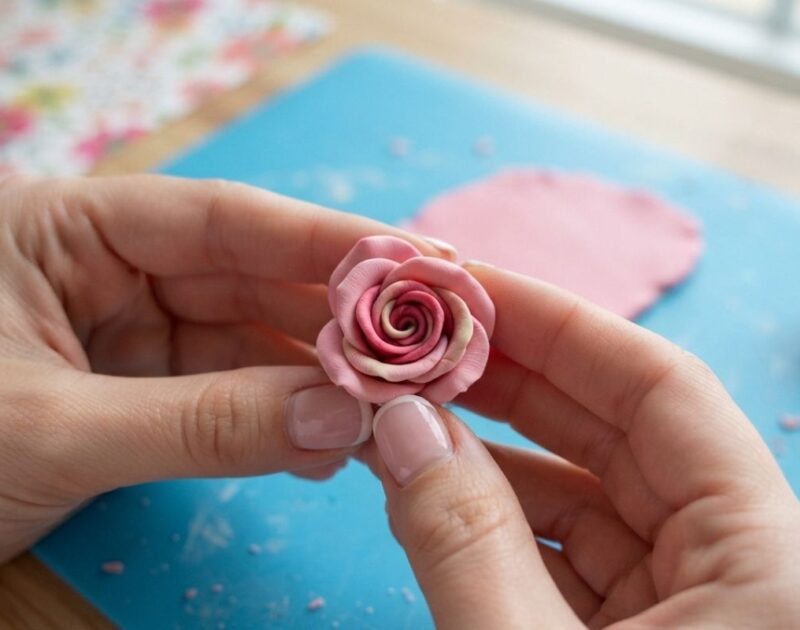
Fimo is another go-to choice, especially for necklaces with intricate shapes like flowers, leaves, or layered charms. Fimo Professional tends to be firmer and holds crisp edges beautifully, while Fimo Soft is easier to condition by hand and blend into smooth color gradients — useful for marbled or ombré pendant designs.
Cernit
Cernit is often praised for its slightly translucent, porcelain-like finish after baking, which gives necklaces a polished, almost glassy look. It’s a popular pick for pieces meant to resemble natural stones, such as agate-style pendants, or for necklaces where a soft, glowing color effect is the goal.
Kato Polyclay
Kato is known for being firmer straight out of the package, which some jewelry makers prefer for very fine, thin details, like tiny lettering or delicate filigree-style pendants. It holds its shape exceptionally well during baking, making it a solid choice for precise, symmetrical designs.
Choosing Based on Your Necklace Style
Different necklace styles benefit from different clay properties:
- Floral and nature-inspired pendants (flowers, leaves, mushrooms) often look best with a clay that’s easy to condition and blend, since these designs rely on smooth color transitions and fine petal shapes.
- Geometric or minimalist pendants (circles, arcs, simple shapes) do well with firmer clays that hold clean, sharp edges.
- Faux-stone or marbled pendants (like agate or turtle-shell patterns) benefit from clays with a slightly translucent finish, which mimics the natural depth of real stone.
- Charm-style necklaces with small figures (bees, hearts, tulips) need a clay that captures fine detail without cracking at thin points, like antennae or petal tips.
A Few Tips for Necklace-Specific Projects
- Always condition your clay thoroughly before shaping — this reduces the risk of air bubbles that can weaken thin pendant shapes.
- If you’re mixing colors for marbled effects, work slowly so the pattern doesn’t over-blend into a single flat tone.
- Let pieces cool completely after baking before handling; clay is more fragile straight out of the oven.
- For pendants that will hang from a cord or chain, reinforce the hole area slightly or use a metal jump ring to reduce stress on the clay over time.
Final Thoughts
There’s no single “best” clay for every necklace — it really depends on the look you’re going for. Softer clays like Fimo Soft are wonderful for blended, organic designs, while firmer options like Kato or Premo suit crisp, detailed pieces.
Cernit shines when you want that soft, semi-translucent finish reminiscent of natural stone. The best approach is often to experiment with a couple of brands on a few test pendants before committing to a full necklace collection — that way, you’ll find the clay that matches both your style and your hands’ natural way of working.