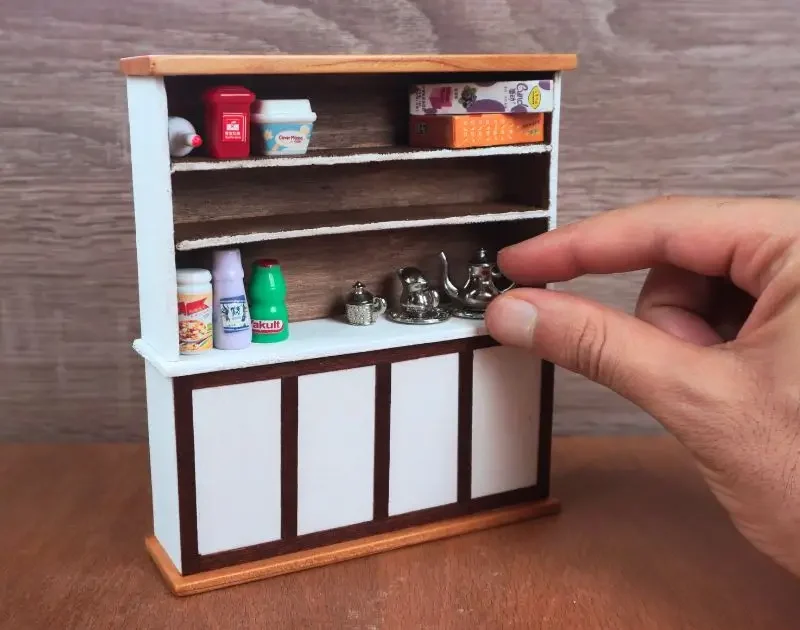
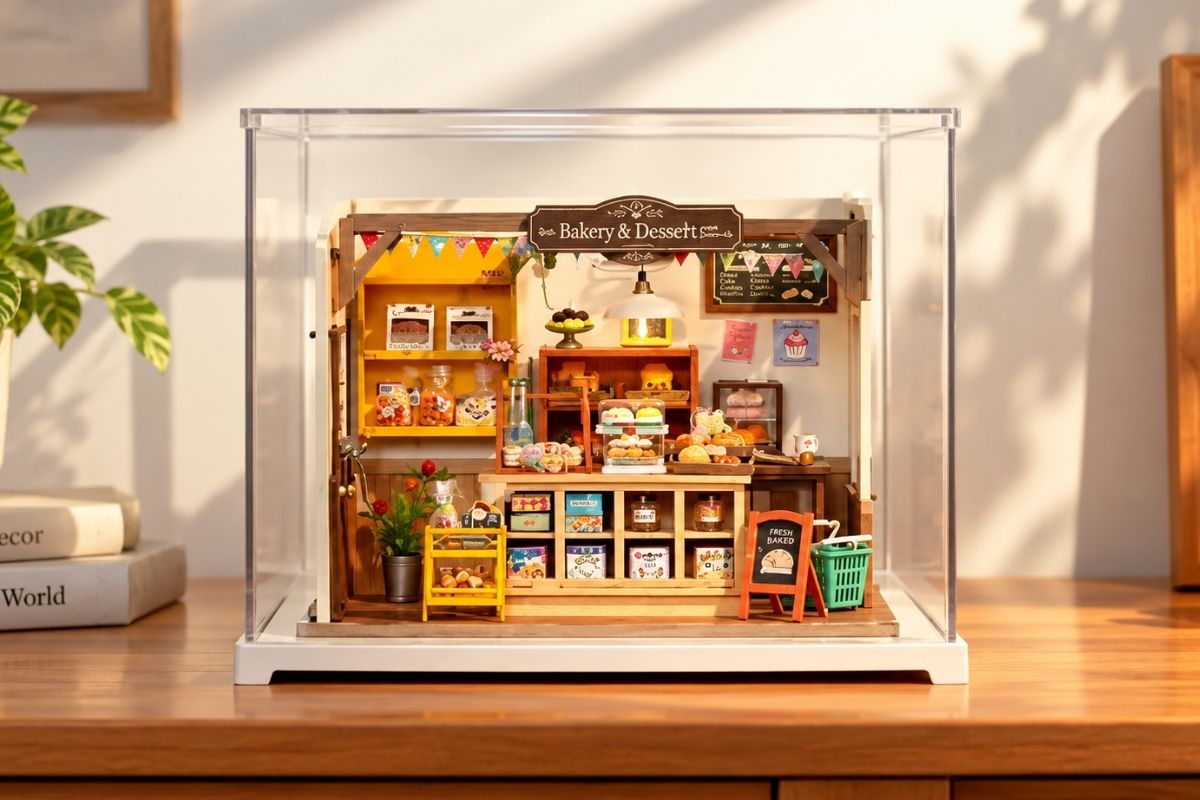
If you’ve been collecting miniatures for a while, you’ve probably run into this question sooner or later: is it okay to have pieces from different scales sitting in the same collection or display? Maybe you started out with 1:12 dollhouse furniture and later fell in love with a tiny 1:24 tea set, or you picked up a charming 1:6 accessory that just doesn’t match anything else you own. So, can these different sizes actually coexist?
The short answer is yes — you absolutely can mix scales in a miniature collection. The longer answer is that it depends on how you do it, and understanding a few basic principles will help you avoid a display that looks confusing or “off” rather than charming.
Why People Mix Scales in the First Place
Most miniature collectors don’t set out to mix scales on purpose. It usually happens naturally:
- You started collecting before knowing scales existed, and only later discovered that 1:12, 1:24, and 1:6 are actually different systems.
- You fell in love with a specific piece — a figurine, a food miniature, a tiny book — regardless of its scale.
- You collect miniatures as standalone art objects rather than as part of a single cohesive dollhouse or room box.
- You’re building a fantasy or whimsical scene where “realistic” proportions aren’t really the goal.
None of these reasons are wrong. Miniature collecting is a hobby, and the most important rule is that you enjoy it. That said, there are smart ways to mix scales so the result still looks intentional rather than accidental.
When Mixing Scales Works Well
1. Separate displays for separate scales The easiest way to mix scales without any visual conflict is to simply keep them apart. A 1:12 dollhouse can sit on one shelf, while your 1:6 or 1:24 pieces live in their own display case or shadow box nearby. This way, each scale gets to shine within its own consistent world, and nothing looks mismatched.
2. Using scale differences for forced perspective Some collectors intentionally combine scales to create the illusion of depth. Placing slightly smaller pieces toward the back of a scene and larger ones toward the front can trick the eye into seeing more distance than actually exists — a trick often used in dioramas and shadow boxes.
3. Non-representational or artistic collections If your goal is a curio-style shelf of “tiny things I love” rather than a realistic miniature room, exact scale consistency matters much less. Many people happily display a 1:12 teacup next to a 1:24 birdcage because the collection is about charm and variety, not architectural accuracy.
4. Grouping by theme instead of scale Some collectors organize by subject — all their miniature bakery items together, or all their miniature garden pieces together — rather than by scale. In this approach, a slightly larger or smaller piece can blend in fine as long as the color palette and style feel unified.
When Mixing Scales Becomes a Problem
Mixing scales isn’t always risk-free. It tends to create an odd, uncanny effect in a few specific situations:
- Inside the same room box or dollhouse. If a chair is noticeably bigger or smaller than the table next to it, or a character’s bed is a completely different scale from their house, the mismatch becomes very obvious very quickly.
- When photographing for content or sales. Close-up photos exaggerate scale mismatches, since there are fewer surrounding objects to give the eye context.
- In dollhouse furniture sets specifically. Buyers of dollhouse furniture almost always expect strict scale accuracy (most often 1:12), since the pieces need to fit dollhouse-sized rooms and work alongside other 1:12 items.
If your project depends on realism — a dollhouse, a diorama meant to look like a real miniature room, or furniture meant to be functional inside a specific-scale house — sticking to one scale is the safer choice.
Simple Tips for Mixing Scales Successfully
- Anchor the display with one dominant scale. Choose a “main” scale for the bulk of your collection, and treat other scales as accents rather than equal partners.
- Use distance to your advantage. Placing mismatched pieces farther apart (different shelves, different corners of a display) reduces the visual comparison between them.
- Group similar sizes together. Even within a mixed collection, clustering pieces of similar size in the same area keeps each cluster looking cohesive.
- Let color and style do the unifying work. A shared color palette or material (like all-wood pieces, or all pastel-toned pieces) can visually tie a mixed-scale collection together even when the sizes vary.
- Label or note the scale for yourself. If you’re an active collector, keeping a simple record of each piece’s scale helps you decide, at a glance, what pairs well together and what doesn’t.
Conclusion
Mixing different scales in a miniature collection is completely possible, and plenty of collectors do it happily. The key is intention: separating displays by scale, using size differences for perspective effects, or building a theme-based rather than scale-based collection can all make mixed scales work beautifully.
The main situations to avoid mixing are functional ones — dollhouses, room boxes, and furniture sets meant to look and work as one realistic scene. Once you understand the difference between a display and a build, you can enjoy every tiny piece you love, no matter what scale it comes in.