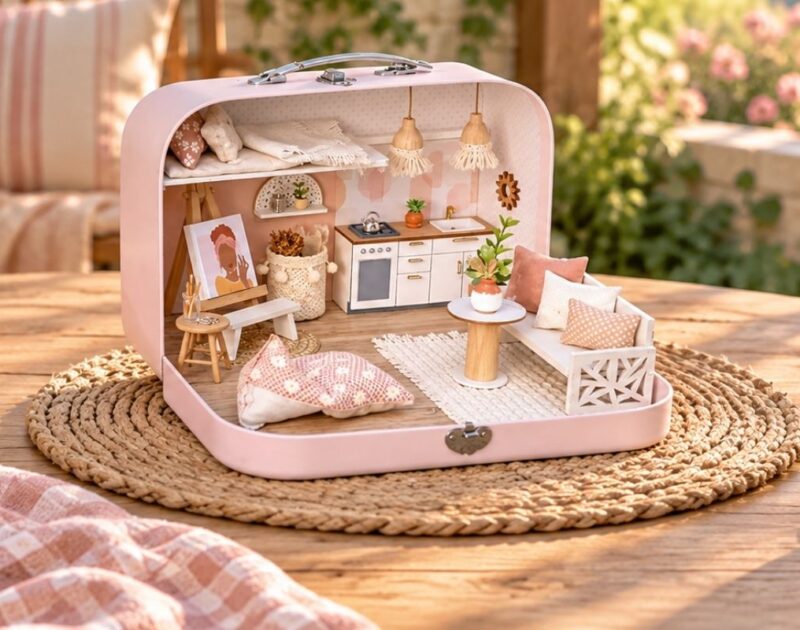

Creating a Miniature Vanity Table with Mirror in 1:12 scale is a rewarding project for anyone passionate about dollhouse furniture and wooden miniatures. This article explains the full process, important tips, and design choices behind the build.
You will also find a step-by-step video tutorial, but I strongly recommend reading this article first, as it contains essential information that will help you avoid mistakes and improve your results.
My main goal with this project is simple: to help others learn how to make high-quality miniatures using clear methods and accessible tools.
I rely on a set of trusted tools that help achieve professional-looking results in miniature woodworking:
- Sandpaper – to smooth edges and prepare surfaces.
- Transparent brown stain – to bring out the natural beauty of the wood grain.
- Wood oil – to protect and enhance the finish.
- Jeweler’s saw – for delicate and precise cuts.
- Small table saw – to speed up straight cuts.
- 12V mini sander – for quick, clean smoothing.
Why Choose the 1:12 Scale?
The 1:12 scale is the most popular and widely used scale in the world of dollhouses and miniatures. It means that 1 inch in miniature equals 12 inches in real life.
Why 1:12 is so important:
- It fits perfectly with standard dollhouses
- Accessories and furniture are easy to combine
- Measurements are simple to calculate
- Ideal for both beginners and experienced makers
Using this scale ensures your miniature vanity table will look realistic and compatible with other dollhouse furniture.
Choosing the Right Scale for Your Project
Before starting any miniature project, choosing the right scale is crucial. A wrong scale can ruin the visual harmony of the entire room.
For this vanity table, 1:12 scale allows:
- Proper mirror proportions
- Comfortable drawer size
- Balanced leg thickness
- Realistic tabletop depth
Once the scale is decided, all measurements become consistent and easier to manage.
Measuring and Cutting with Precision
Measurement and cutting are the foundation of a successful miniature build.
Key tips:
- Always measure twice before cutting
- Use a ruler marked in millimeters for accuracy
- Draw all parts on paper before transferring them to wood
Small mistakes in measurement can become very noticeable at miniature scale, especially when working with mirrors and drawers.
Using 3mm Plywood for Miniature Furniture
For this project, I used 3mm plywood, which is ideal for miniature furniture.
Why 3mm plywood works well:
- Easy to cut and shape
- Strong enough for structural parts
- Lightweight but durable
- Smooth surface for finishing
This thickness is perfect for creating delicate details while maintaining strength.
The Role of a Small Table Saw
A small table saw played an important role in achieving clean and accurate cuts.
Advantages of using a small table saw:
- Straight and consistent cuts
- Better control for thin wood
- Faster workflow
- Professional results
If you don’t have one, a fine hand saw can work, but patience and extra care will be needed.
Safety First: Be Careful with Sharp Tools
Miniature tools may be small, but they are still very sharp.
⚠️ Important safety tips:
- Always cut away from your fingers
- Use clamps when possible
- Wear protective glasses
- Take breaks to avoid fatigue
Safety is essential, especially when working with thin wood pieces.
Precision, Patience, and Creativity
Making a miniature vanity table is not just about tools—it’s about mindset.
- Precision ensures clean joints and symmetry
- Patience prevents rushed mistakes
- Creativity allows you to add personal details
The mirror frame, table legs, and drawer handles are perfect areas to express creativity while keeping the design elegant.
Step-by-Step Video Tutorial Included
Along with this article, you will find a step-by-step video tutorial showing the complete process of building the miniature vanity table with mirror.
In addition, there is also a separate video tutorial for making a miniature bed, explained step by step, which complements this project beautifully and helps complete a dollhouse bedroom set.

My Mission: Helping Others Learn Miniature Making
I create these projects with one goal in mind:
to help others learn how to make wooden miniatures with confidence.
Whether you are a beginner or an experienced maker, I hope this tutorial inspires you to experiment, improve your skills, and enjoy the art of miniature furniture making.
Final Thanks to My Followers
Finally, I want to send a big thank you to all my followers and supporters.
Your encouragement, comments, and shared passion for miniatures motivate me to keep creating, teaching, and sharing detailed tutorials.
If you found this article helpful, don’t forget to watch the video, try the project yourself, and follow for more miniature woodworking guides.
Happy miniature making! 🪵✨