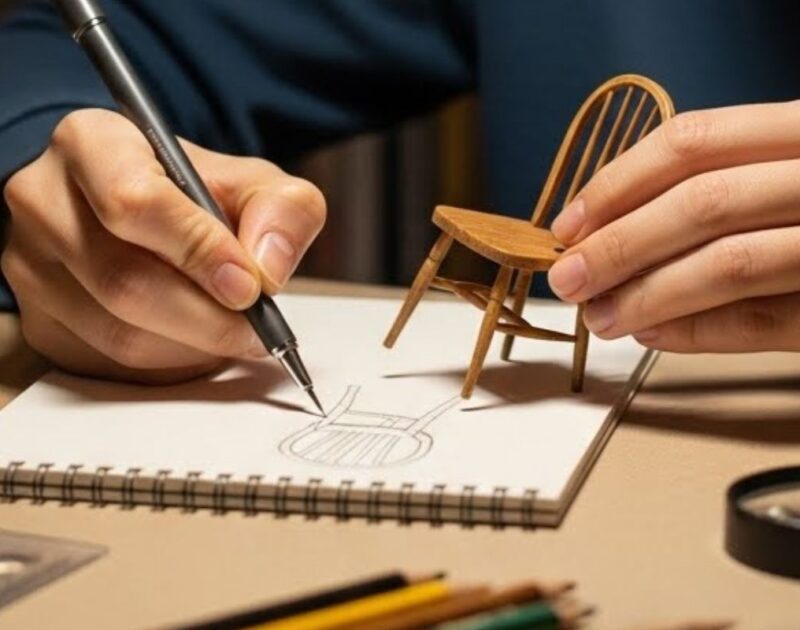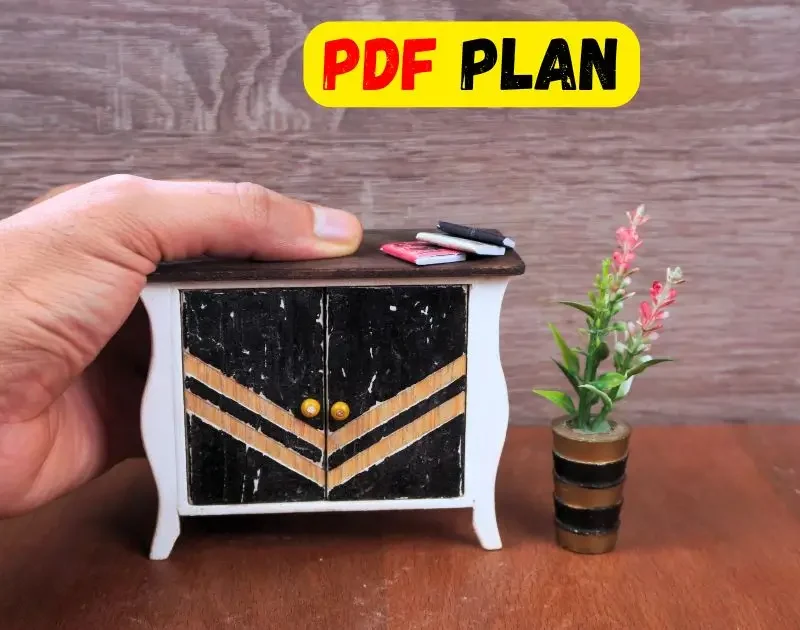
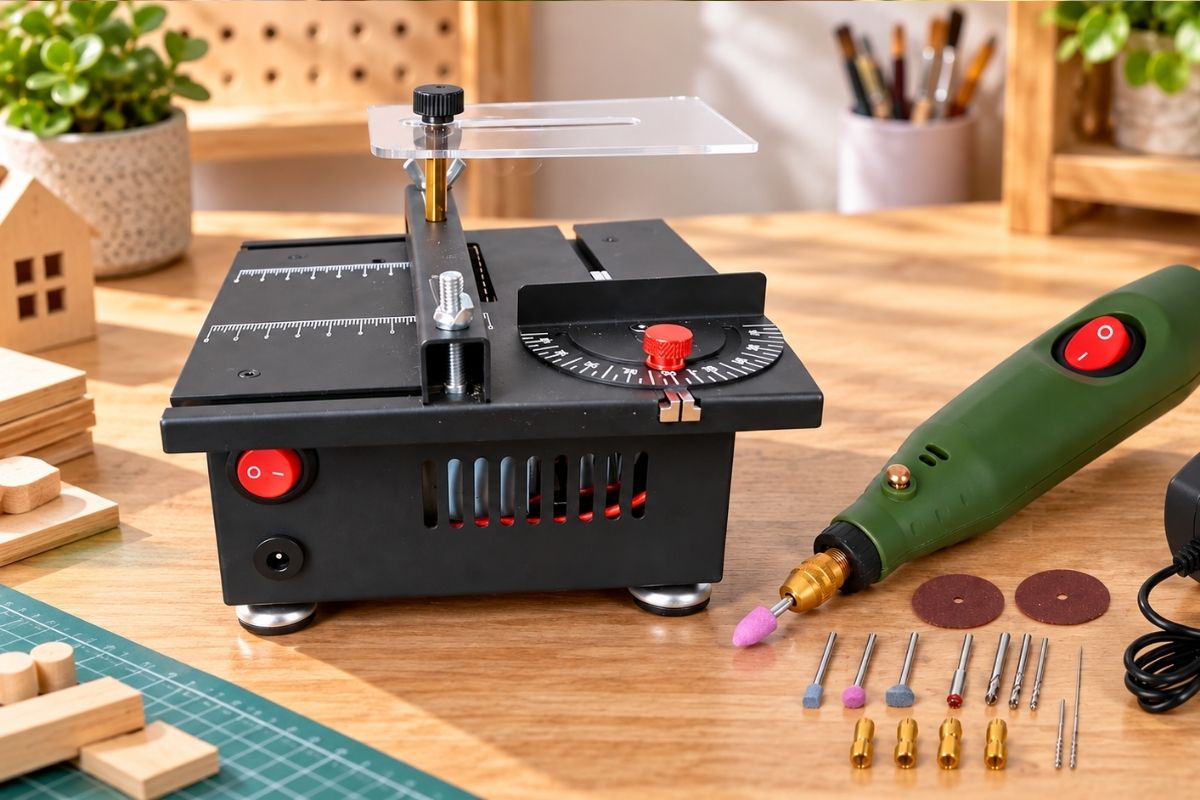
If you’re just discovering the world of miniature making, the tool question is usually the first thing that stops people before they even begin. Scroll through enough miniature videos and you’ll spot table saws, rotary tools, mini drills, and all kinds of intimidating equipment. It’s easy to assume you need a fully stocked workshop just to cut your first piece of wood.
The good news: you don’t.
The short answer: no, not to start
Power tools make certain steps faster and can help with precision once you’re working at scale, but they are not a requirement for a beginner. Most of the classic hand-scale techniques used in dollhouse and miniature furniture making were developed long before rotary tools and mini table saws became affordable hobby items. A huge number of miniature makers still work entirely by hand, especially in the early stages.
What actually determines whether you can start is much simpler than a tool list: patience, a steady hand, and the willingness to work slowly on small pieces.
What you can build with hand tools alone
At a beginner level, a small set of hand tools covers almost everything:
- A craft knife or hobby blade for cutting thin wood, cardboard, or plastic sheet
- A cutting mat to protect your work surface and keep cuts clean
- A metal ruler for straight lines
- Sandpaper in a couple of grits for smoothing edges
- Wood glue or craft glue appropriate to your material
- Small clamps or clothespins to hold pieces while glue dries
With just these, you can cut templates, assemble simple furniture shapes, sand joints smooth, and glue everything into a finished piece. Many popular beginner projects — small boxes, simple shelving units, basic cabinets — are entirely achievable this way.
Where power tools start to matter
Power tools become genuinely useful once you move into specific situations rather than as a general upgrade:
Repetitive cutting. If you’re making the same cut dozens of times across multiple projects, a small rotary tool or mini saw saves time and gives more consistent results than a hand blade.
Harder materials. Denser hardwoods, thicker plastic, or metal components are harder to cut cleanly by hand. A rotary tool with the right attachment handles these more safely than forcing a craft knife through them.
Fine detail work. Tiny holes for hinges, miniature hardware, or intricate carving are often easier with a small precision drill than with hand tools alone.
Speed at scale. If miniature making becomes a regular production process rather than an occasional hobby project, the time saved by power tools adds up quickly.
None of these apply to someone making their first few pieces. They matter later, once you know which techniques you actually enjoy and which materials you keep coming back to.
A simple way to decide
A useful rule of thumb: start with hand tools, and only add a power tool when a specific task keeps being difficult or slow with what you already have. That way, every tool you buy solves a problem you’ve actually run into, rather than sitting unused because a video suggested you might need it “eventually.”
This also keeps the hobby affordable and low-pressure in the beginning, which matters more than most people expect. A lot of newcomers lose motivation not because the craft is too hard, but because they spent money and time gearing up before finding out whether they enjoy the process.
If you do want to add one tool early
If budget allows and you’re fairly confident you’ll stick with the hobby, a basic rotary tool with a few attachments (cutting disc, sanding drum, small drill bits) is the single most versatile option. It covers cutting, sanding, and light drilling in one compact tool, without the space or cost of larger power equipment.
A word on safety
Whether you’re working with hand tools or power tools, miniature pieces are small, which means fingers are always close to blades. Go slowly, keep both hands aware of where the blade is, and don’t rush cuts just because the piece looks simple. This matters more with power tools, where a slip happens faster and with less warning than with a hand blade.
Conclusion
You don’t need a workshop full of equipment to start making miniatures — a craft knife, a cutting mat, sandpaper, and some glue are enough to build real, finished pieces. Power tools are a later upgrade for speed and precision once you know what kind of miniature work you enjoy, not a starting requirement. Begin small, build a few pieces by hand, and let your own projects tell you which tool is actually worth adding next.