Definition of Miniature Food Art
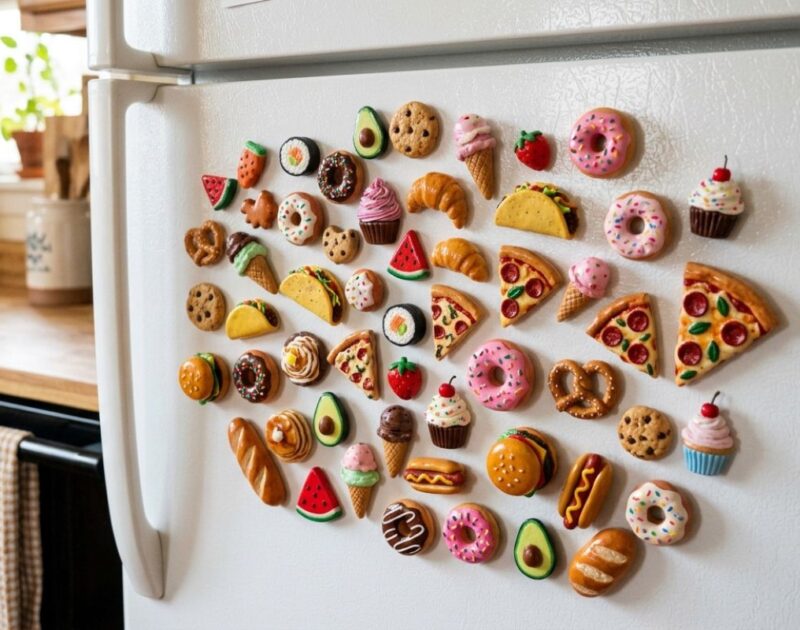
Miniature food art is the creative process of making tiny, realistic replicas of real meals, desserts, fruits, and vegetables for dollhouses or miniature displays. This art form combines craftsmanship, patience, and attention to detail. Every small tomato slice, tiny loaf of bread, or miniature sushi roll is carefully shaped to look like the real thing — just in a much smaller scale.
| Product | Buy |
|---|---|
| Air Dry Clay |

|
| Clay Tools |
|
| Clay Shaper Tool |
|
| Magnets |
|
| Jewellery Materials |
|
| Acrylic Colours |
|
| Paint Brushes |
|
Dollhouse food adds life and personality to miniature scenes. A kitchen looks more realistic with fresh vegetables on the counter. A dining table feels complete with tiny plates of food. These details transform a simple dollhouse into a warm, believable world. Miniature food art is not only about decoration; it is about storytelling through tiny details.
Why Choose Polymer Clay?
Polymer clay is one of the best materials for making dollhouse food. It is soft, flexible, and easy to shape, which makes it perfect for beginners and experienced crafters alike. Unlike air-dry clay, polymer clay does not harden until it is baked in an oven, giving you enough time to adjust shapes and refine details.
Another advantage is its wide range of colors. You can mix shades to create realistic tones for bread crusts, tomatoes, lettuce, or cooked meals. After baking, polymer clay becomes strong and durable, allowing your miniature food to last for years without cracking easily. Its smooth texture also makes it ideal for creating fine details like seeds, layers, and textures.
Because of these qualities, polymer clay gives artists better control and professional-looking results.
Ideas for Miniature Foods
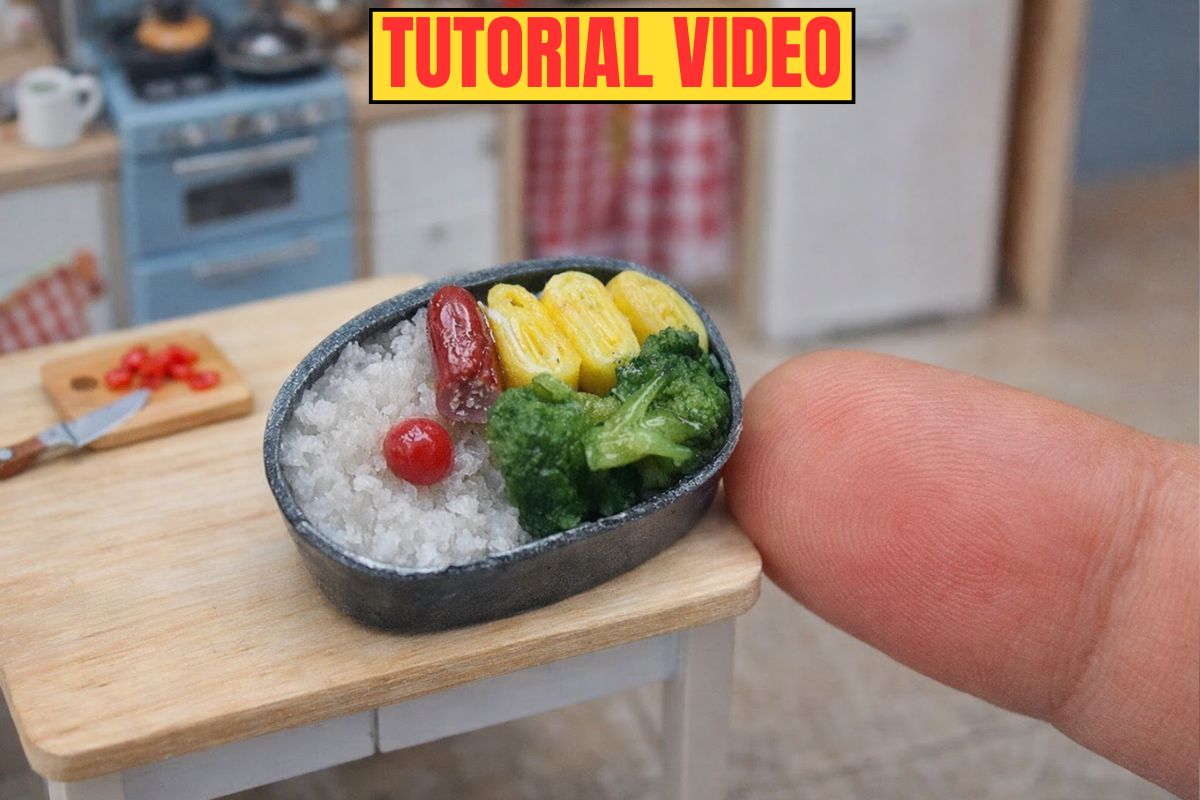
There are endless ideas when it comes to dollhouse food. You can create small main dishes like rice bowls, pasta plates, sushi sets, or traditional meals arranged inside tiny containers 🍱. These pieces add character to miniature kitchens and dining rooms.
Vegetables and fruits are also popular choices 🍅. Cherry tomatoes, cucumbers, carrots, strawberries, and lemons are fun to shape and great for practicing details. Their bright colors make any miniature scene more vibrant.
If you love sweets, miniature cakes, cupcakes, cookies, and pastries are exciting to make. Adding small decorations like cream swirls or fruit toppings makes them even more charming. Bread and baked goods are another beautiful option — baguettes, croissants, or sandwich loaves can look incredibly realistic when textured correctly.
The beauty of this hobby is that you can recreate almost any real food in tiny form.
Adding Details and Texture
Details are what make miniature food look realistic instead of toy-like. After shaping the basic form, the next step is adding texture. For example, you can gently press a sponge onto bread to create a baked surface effect. A needle tool can be used to add lines on lettuce leaves or seeds on strawberries.
Layering is also important. A cake slice should show visible layers inside. A tomato should have subtle color variation. These small touches make a huge difference.
Working slowly and carefully helps achieve better results. Even the smallest indentation can improve realism. Remember, in miniature art, tiny details create the biggest impact.
Paying Attention to Scale
Scale is one of the most important aspects of dollhouse food. If the food is too large, it will not look natural inside the miniature setting. Most dollhouses follow a 1:12 scale, meaning one inch in miniature equals one foot in real life.
Before creating a piece, it helps to compare it with miniature plates, tables, or kitchen items. Keeping proportions accurate ensures harmony in the scene. When scale is correct, the entire dollhouse environment looks believable and balanced.
Mastering scale takes practice, but it significantly improves the quality of your work.
Avoiding Excessive Details
While details are important, adding too many can ruin the final look. Over-texturing or using too many colors may make the piece appear messy. Real food often has subtle textures, not exaggerated ones.
The goal is balance. Focus on essential details and keep them soft and realistic. Sometimes, less is more. Clean and simple finishing often looks more professional than overworked designs.
I have also found a video by one of the talented miniature food artists that may be very helpful for you. Watching experienced creators can give you new ideas, different techniques, and a better understanding of how to improve your details and realism.
Encouragement for Beginners
If you are new to miniature food making, do not worry about perfection. Every artist starts somewhere. Your first pieces may not look perfect, but each attempt will improve your skills.
Start with simple fruits or bread before moving to complex dishes. Practice, experiment with colors, and most importantly, enjoy the creative process. Miniature art is about patience, imagination, and fun.
With time and dedication, you will be amazed at how realistic your tiny creations can become. 🍅🍱