Miniature making is a creative and detailed hobby that requires patience, precision, and the right materials. Among all tools used in crafting miniatures, glue plays a crucial role because it holds every tiny component together.
| Product | Buy |
|---|---|
| Rapid Wood Glue |

|
| Needle File |
|
| Sandpaper |
|
| Transparent Brown Stain |
|
| Wood Oil |
|
| Jeweler’s Saw |
|
| Small Table Saw |
|
| 12V Mini Drill |
|
Choosing and using glue correctly can greatly improve the quality and durability of your miniature projects. Here are some essential tips for using glue effectively when making miniatures.
1. Choose the Right Type of Glue
Not all glues are suitable for miniature work. Different materials require different adhesives. For example, white craft glue works well with paper, cardboard, and wood, while super glue is better for metal, plastic, or resin parts. Hot glue can be useful for larger pieces but is often too thick for delicate details. Always match the glue type with the material you are working with.
2. Use Small Amounts of Glue
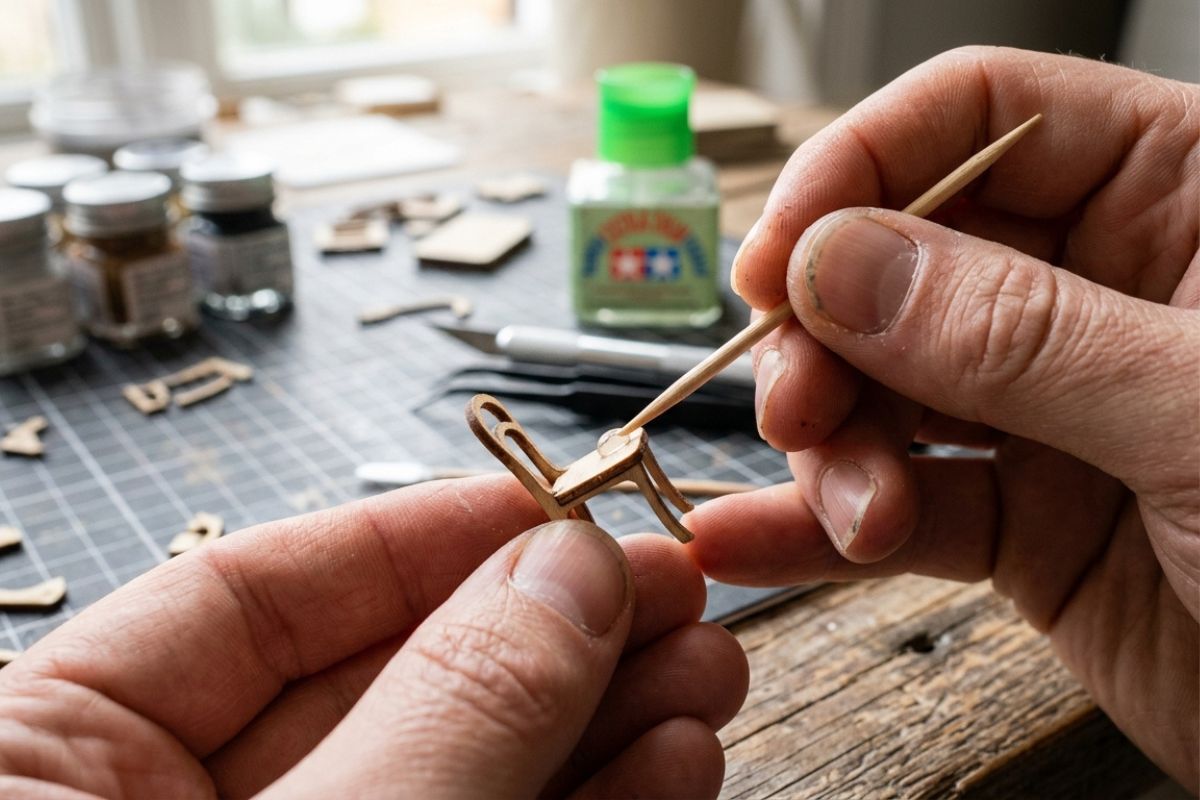
In miniature crafting, less glue is usually better. Applying too much glue can cause visible stains, overflow, or damage to small details. Use a toothpick, needle, or fine applicator to control the amount of glue and apply it precisely where needed.
3. Work Slowly and Carefully
Miniatures involve tiny components that require accurate placement. After applying glue, take your time positioning the pieces correctly before the adhesive dries. Fast-drying glues can be helpful, but they also require steady hands and careful planning.
4. Test Before Final Assembly
Before gluing permanently, test-fit the parts to make sure they align properly. This step prevents mistakes that can be difficult to fix once the glue has hardened.
5. Keep Your Workspace Clean
A clean workspace helps prevent dust or unwanted particles from sticking to glued surfaces. Wipe excess glue immediately using a cotton swab or tissue to maintain a neat finish.
6. Allow Enough Drying Time
One common mistake is moving parts before the glue has fully dried. Follow the drying instructions on the glue packaging and give your miniature enough time to set firmly.
7. Store Glue Properly
Close glue containers tightly after use to prevent drying or clogging. Store them in a cool, dry place to extend their lifespan and maintain performance.
Conclusion
Using glue properly is essential for creating strong, clean, and professional-looking miniatures. By selecting the right adhesive, applying it carefully, and allowing adequate drying time, miniature artists can achieve better results and enjoy a smoother crafting experience. With practice and attention to detail, glue becomes not just a tool, but an important partner in bringing miniature creations to life.