Paper sculpture has become one of the most striking ways to bring life-like or stylized animal shapes into home decor. From feathered garden birds to angular low-poly foxes, this craft proves that a few sheets of colored paper can be folded, layered, and shaped into pieces that feel almost as alive as the animals they represent. Below are 9 paper sculpture ideas, each built with a different technique, to spark ideas for your own designs.
Materials Commonly Used
Most of these pieces rely on a similar core toolkit: sturdy cardstock or textured craft paper in a range of colors, a sharp detail knife or small scissors for precise cutting, a bone folder for crisp creases, and strong craft glue or double-sided tape for assembly. Low-poly designs typically start from pre-scored template sheets, while feathered or layered pieces are built from many individually cut shapes glued in overlapping rows.
1. Olive Bird Among Snowdrops
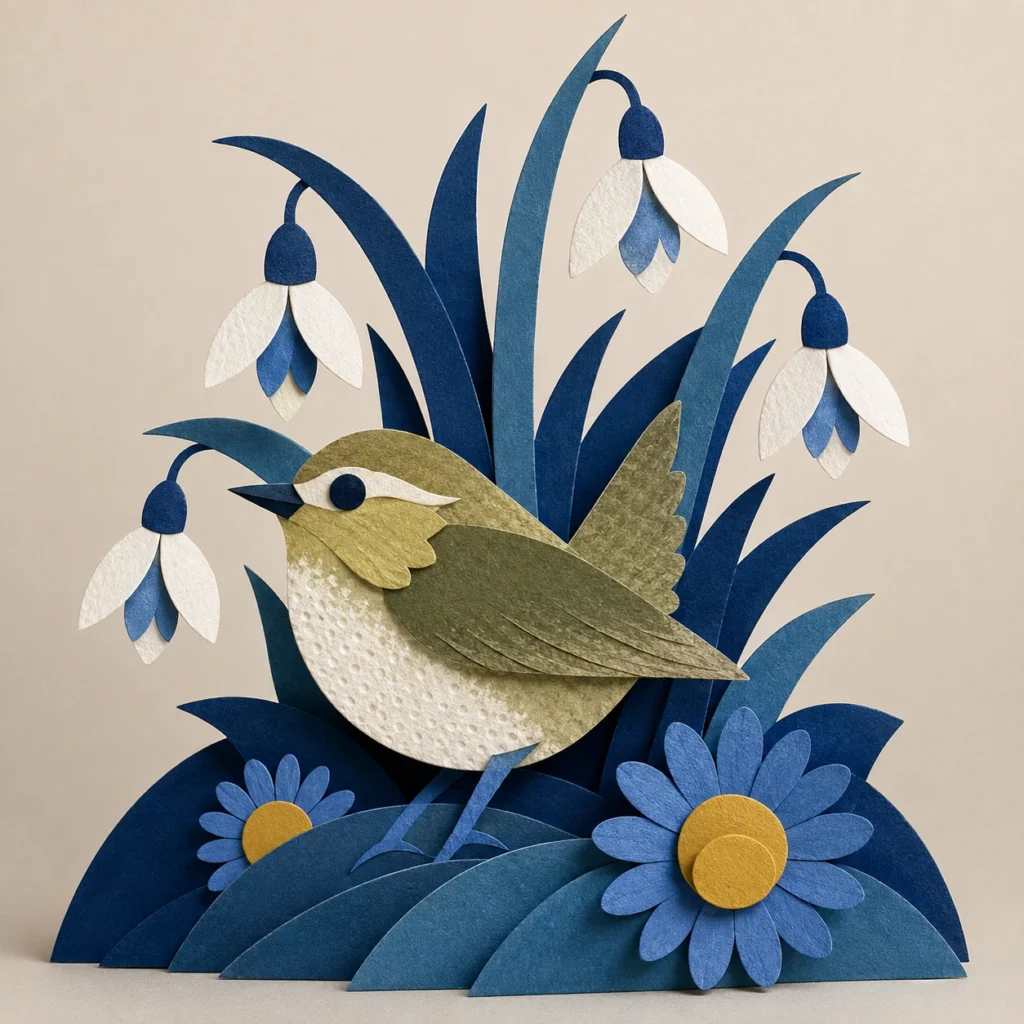
This piece layers dozens of small feather-shaped cutouts in olive, gold, and cream tones to mimic real plumage, perched on a base of stacked paper “grass” and paper daisies with white snowdrop flowers rising behind it.
2. Blue Songbird on a Branch
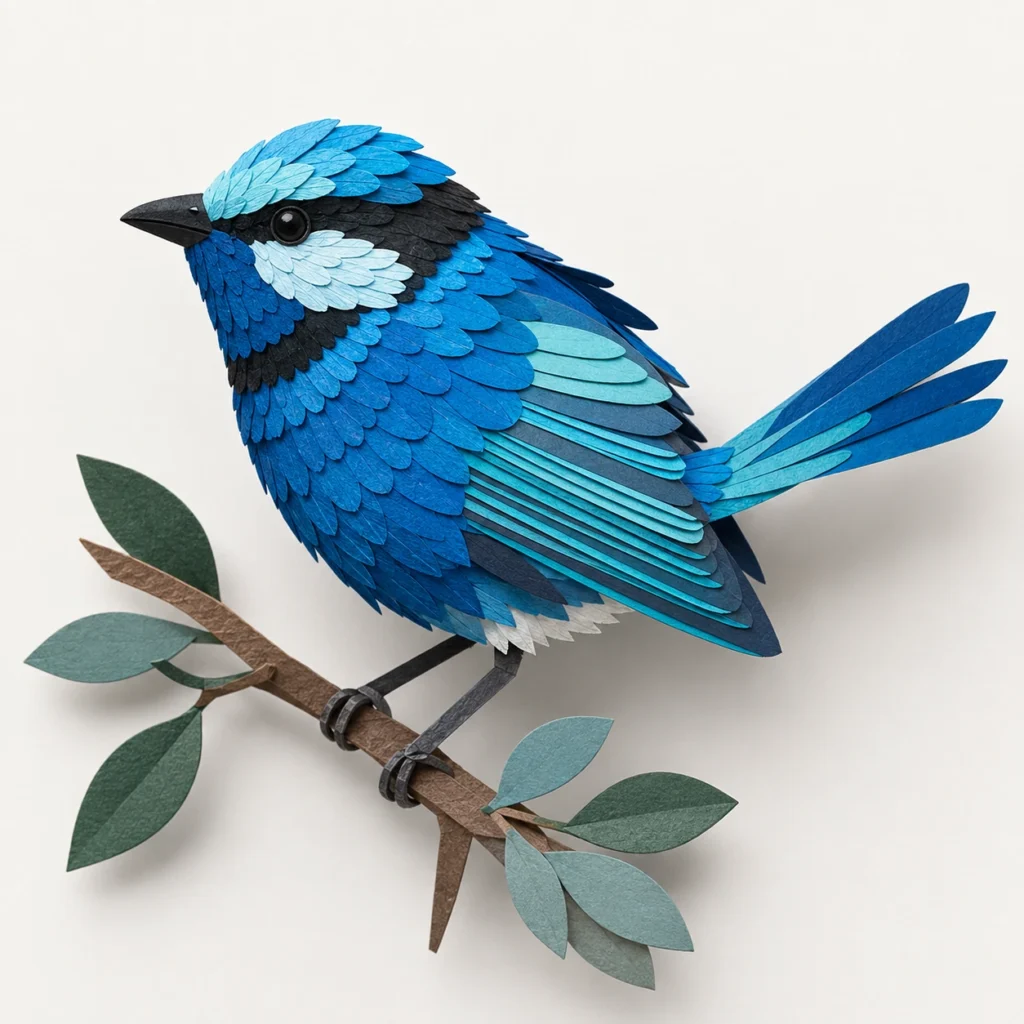
A small blue bird with a gradient chest — deep navy fading into sky-blue and white — sits on a paper branch with layered leaves. Its feathers are built the same way as the olive bird, proving how versatile the layered technique is across different color palettes.
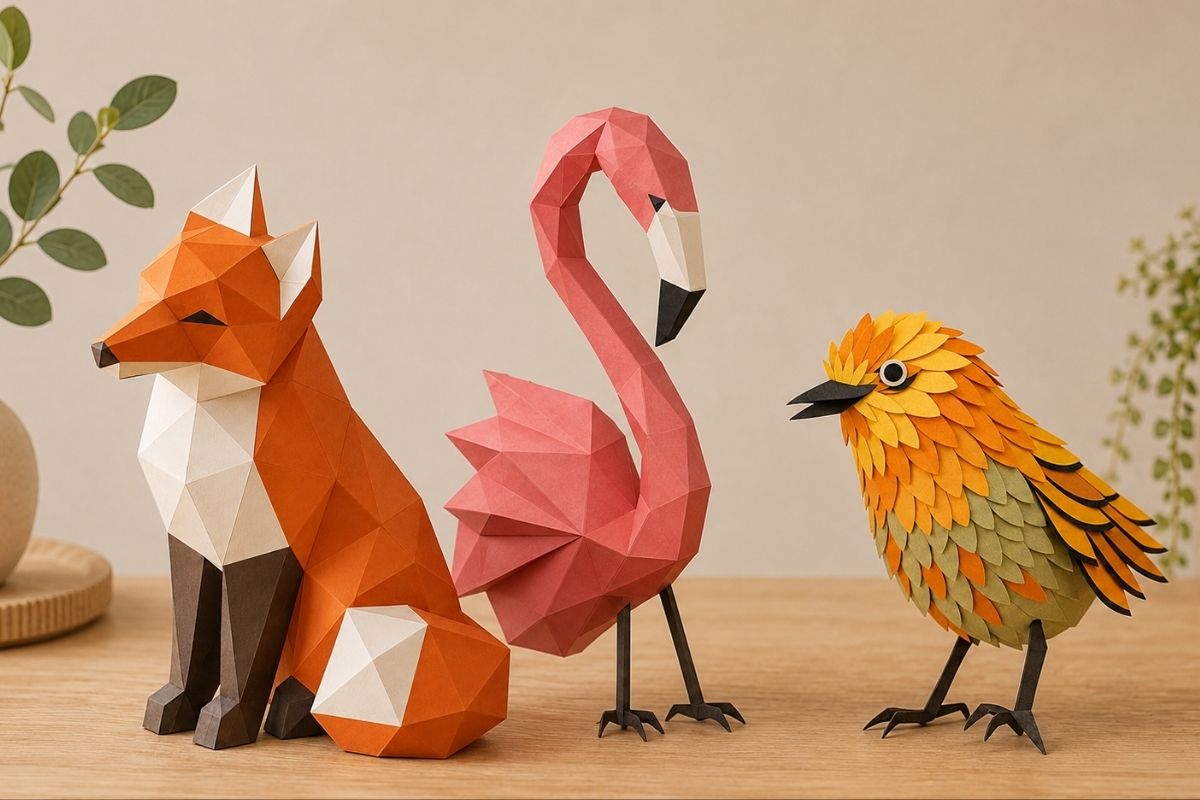
3. Low-Poly Fox
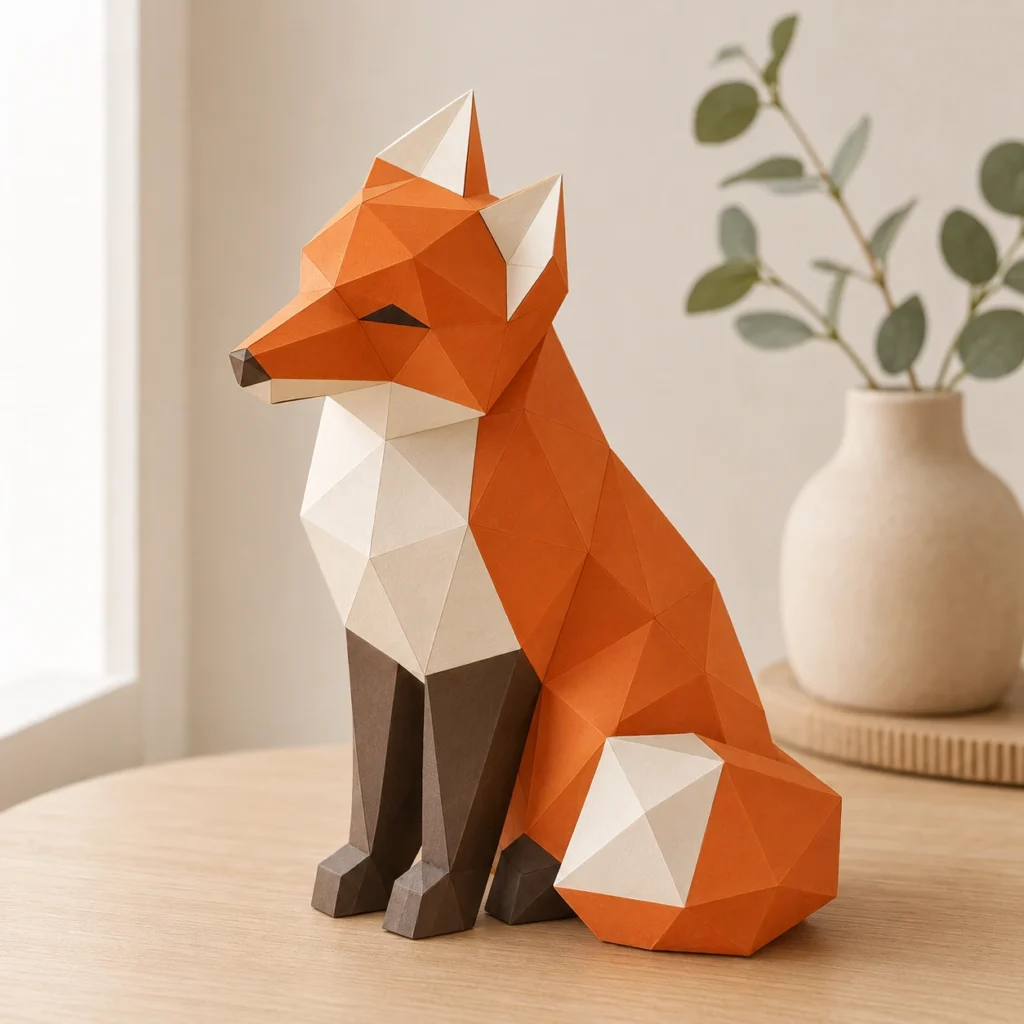
A seated fox rendered in flat triangular facets, with burnt-orange fur contrasting against a white chest and brown legs. It sits on a wooden tabletop next to a vase of eucalyptus, showing how well low-poly pieces work as standalone home accents.
4. Low-Poly Rodent
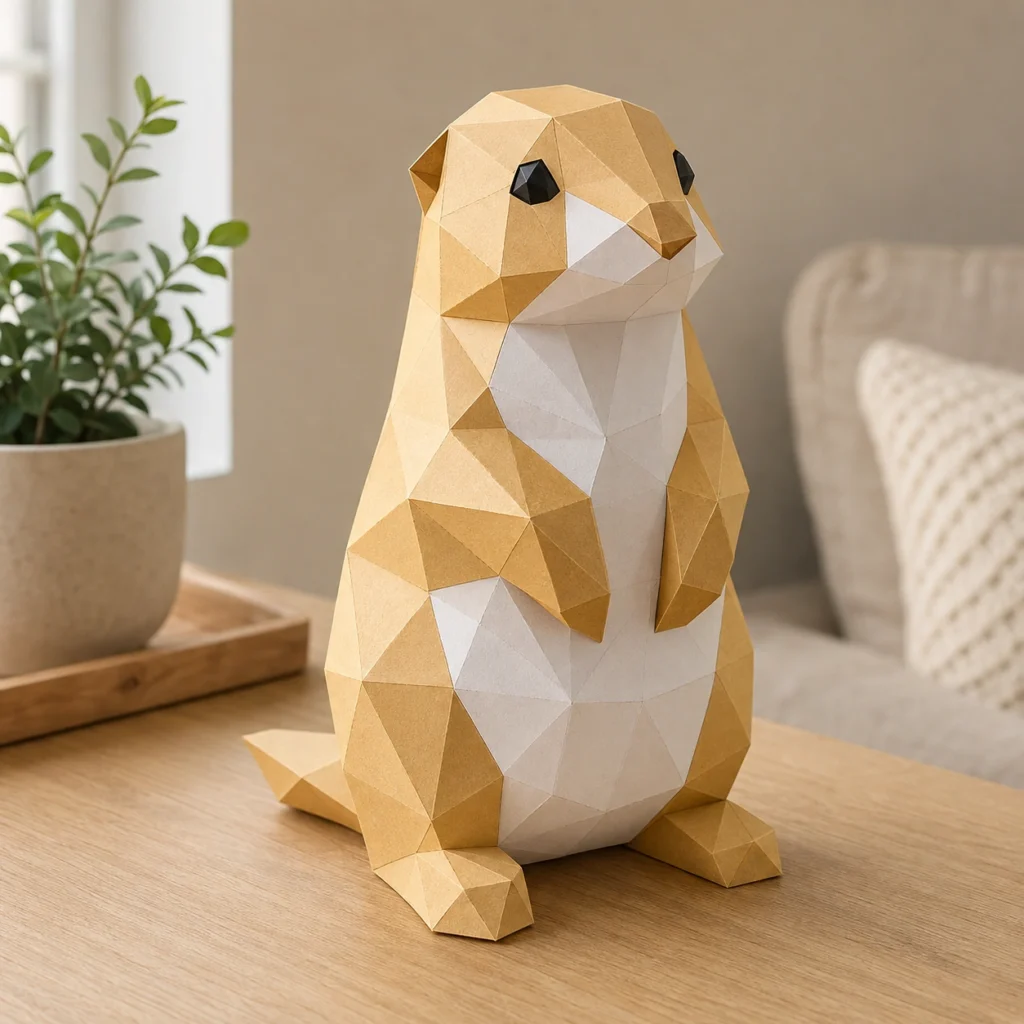
A round, sitting rodent with golden-tan fur and a cream belly, built using the same faceted paper-folding method as the fox. Its simple palette of two tones lets the geometric folds take center stage.
5. Hanging Bird Trio (Nursery Mobile)
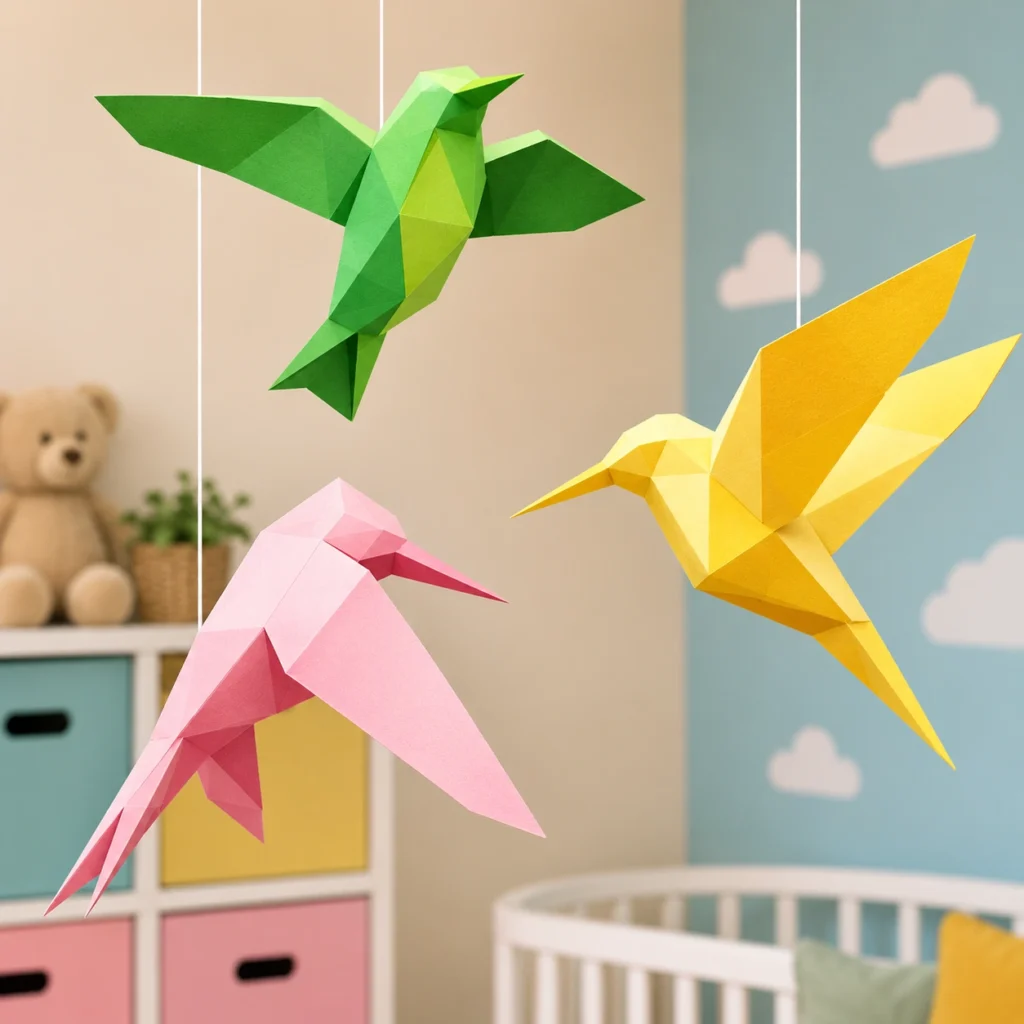
Three low-poly hummingbirds — green, yellow, and pink — hang from string over a crib, set against a sky-and-clouds wall. This shows how the low-poly technique can be scaled down and turned into a functional mobile for a nursery.
6. Low-Poly Owl
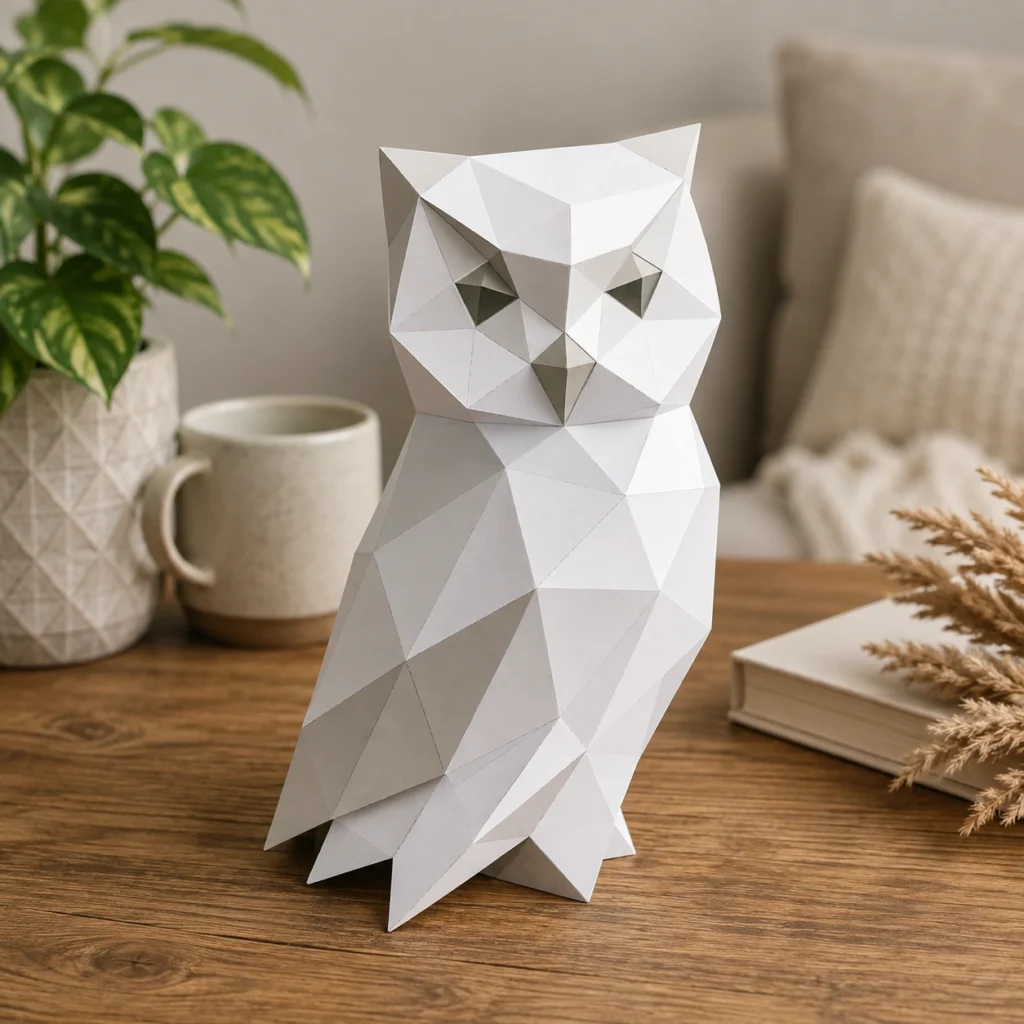
A pale, near-white owl with a sharp, angular face and layered chest facets, displayed on a wooden table beside a plant and a mug. Its muted color choice lets the geometry stand out rather than a bold palette.
7. Wall-Mounted Flamingo
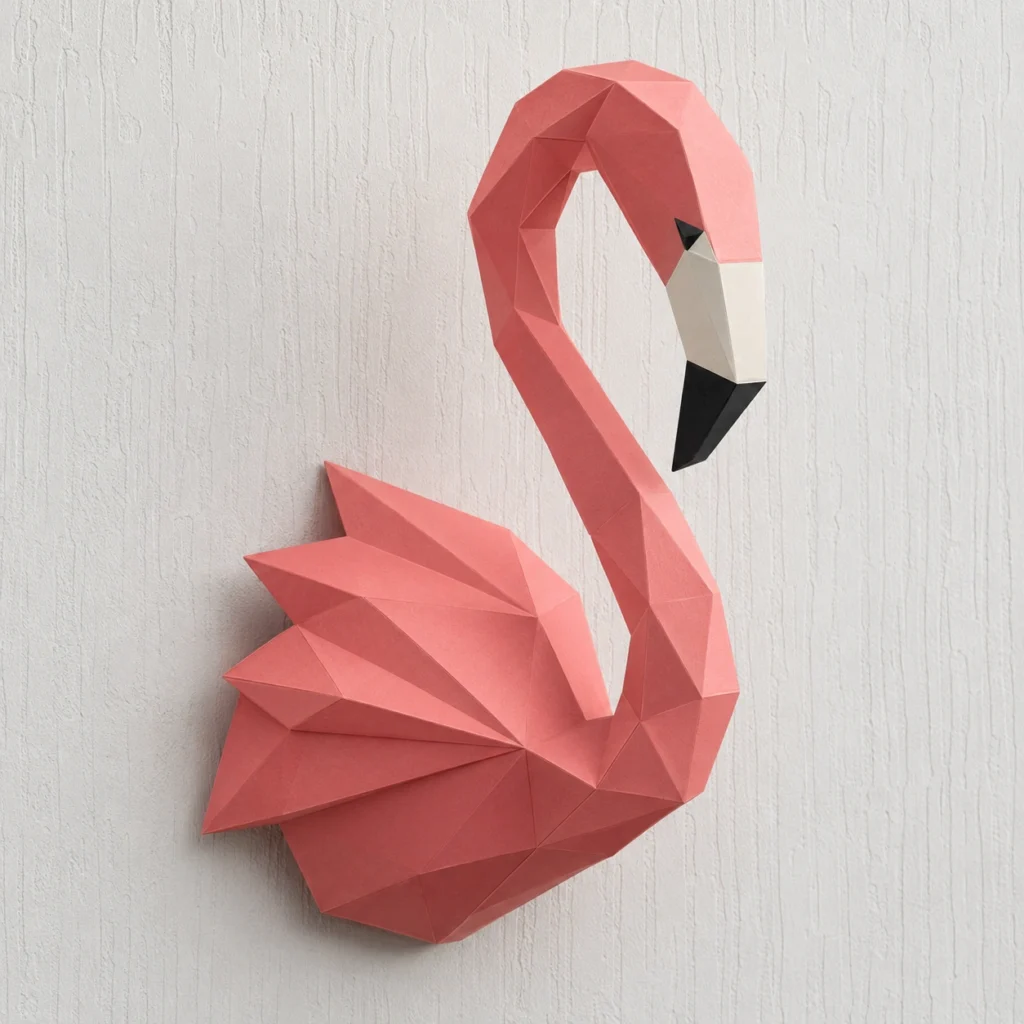
A coral-pink flamingo head and neck, folded into a smooth S-curve using flat paper planes with no visible support, mounted directly onto a textured wall like a piece of modern wall art.
8. Red Paper Crab
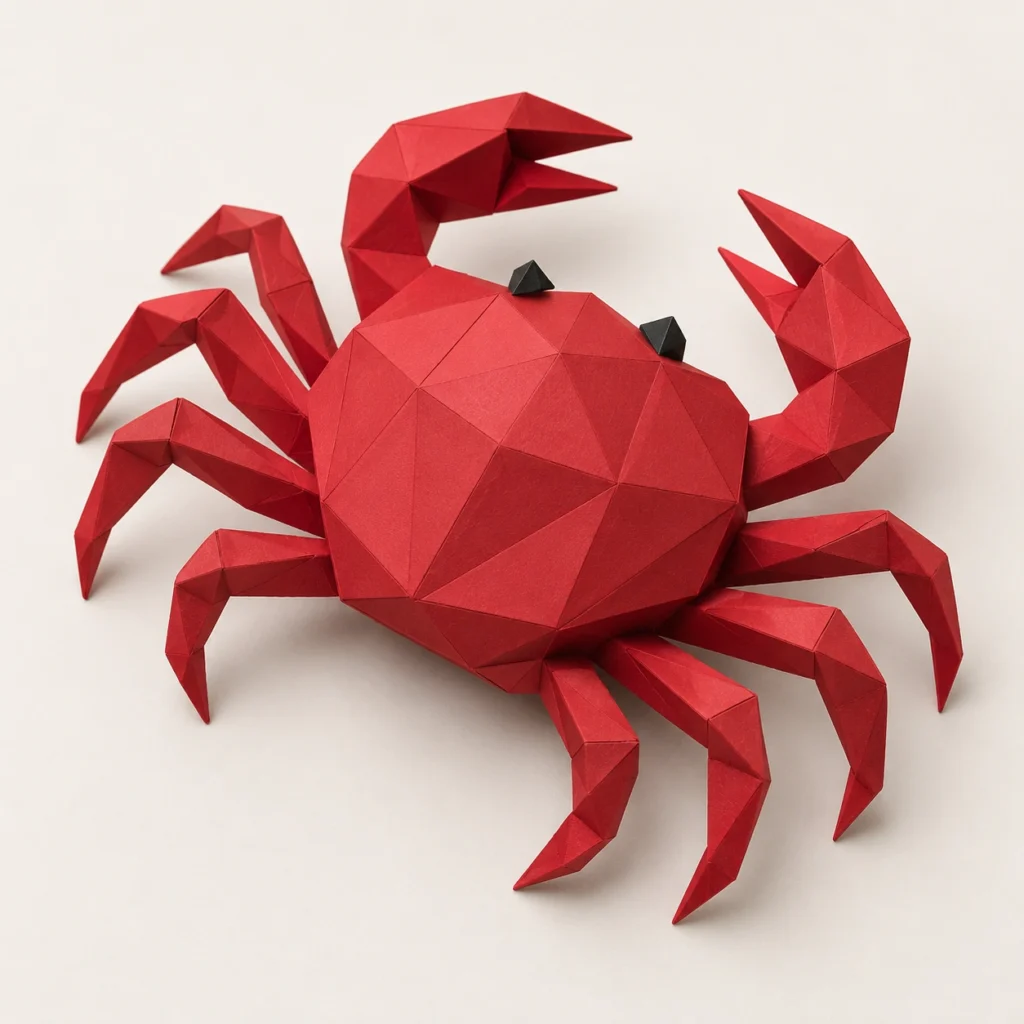
A deep red crab with raised claws and angled legs, built from the same faceted low-poly folding style but arranged into a more dynamic, action-like pose.
9. Orange-Yellow Feathered Bird
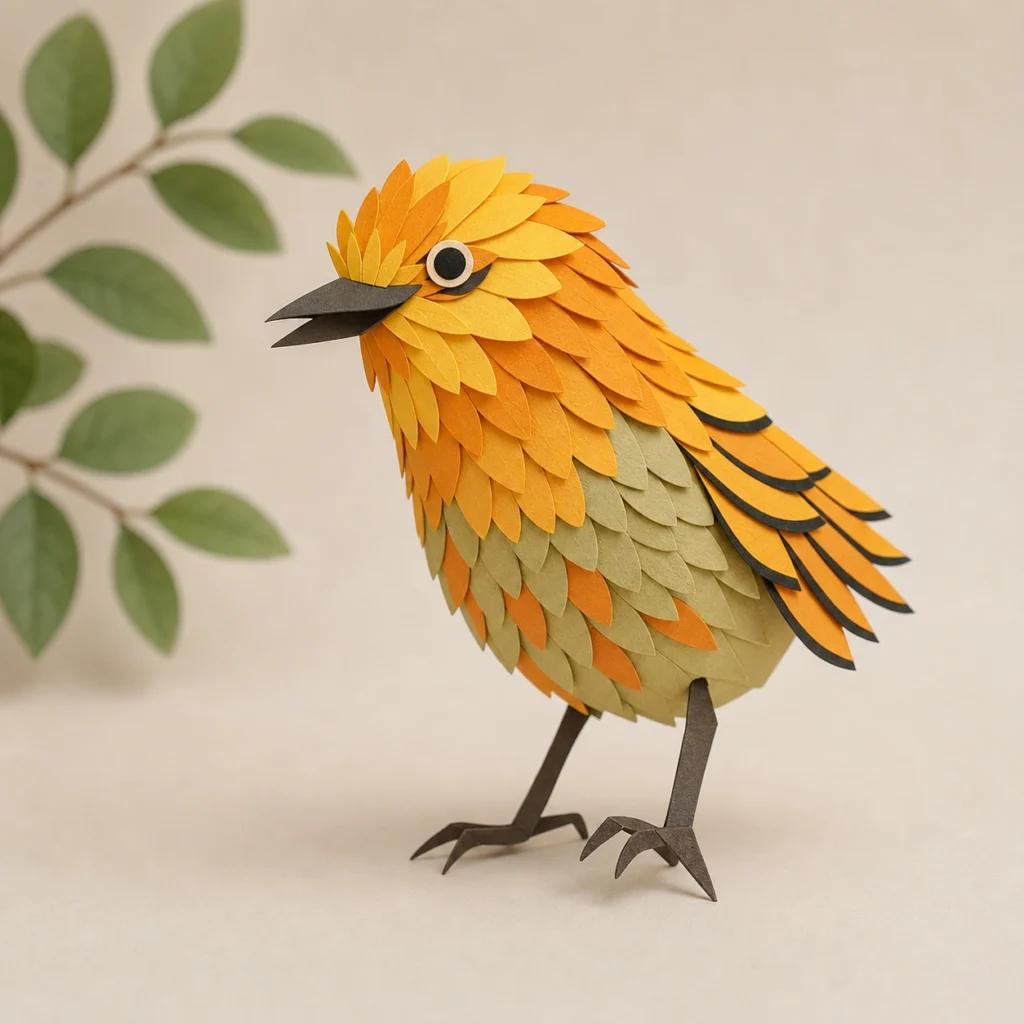
A bird with layered orange, gold, and olive feathers, standing on thin wire-like paper legs next to green leaves, its beak slightly open as if caught mid-chirp — another example of the detailed feathered technique from the first two birds.
Tips for Making Your Own Paper Animal Sculptures
- Start with a low-poly template if you’re new to paper sculpture — the pre-scored lines make folding much more forgiving than freehand feather-cutting.
- Stick to two or three paper colors per piece so the folds or feather layers stay the visual focus.
- Use a bone folder for every crease; sharp, clean folds make a noticeable difference in how “finished” the final piece looks.
- For feathered designs, work from the bottom up and slightly overlap each row, the same way real feathers layer.
- Choose heavier cardstock for pieces that need to hold their own weight, like wall-mounted or standing sculptures, and lighter paper for anything meant to hang and move.
Conclusion
These 9 paper sculpture ideas show just how much range this craft has, from delicate, feather-by-feather birds to bold, faceted low-poly animals and pieces built for movement or wall display. Whichever technique you’re drawn to, the same basic materials and a bit of patience are all it takes to start building your own paper menagerie.