Creating dollhouse miniatures is a deeply rewarding craft, but it also comes with unique challenges that even experienced artisans encounter. From choosing the right scale to dealing with fragile materials, each step requires patience, precision, and creativity.
Whether you are a beginner or a seasoned miniature maker, understanding the common difficulties can help you improve your process and achieve more polished results. Below are the most important challenges you may face when crafting miniature furniture and decorating a dollhouse, along with insights into how to overcome them.
I rely on a set of trusted tools that help achieve professional-looking results in miniature woodworking:
- Sandpaper – to smooth edges and prepare surfaces.
- Transparent brown stain – to bring out the natural beauty of the wood grain.
- Wood oil – to protect and enhance the finish.
- Jeweler’s saw – for delicate and precise cuts.
- Small table saw – to speed up straight cuts.
- 12V mini sander – for quick, clean smoothing.
1. Choosing the Right Scale for Your Project
One of the first challenges miniature artists encounter is choosing the correct scale. Dollhouses are typically made in 1:12, 1:24, or 1:48 scales, and each size brings different advantages and limitations. Beginners often struggle to decide which scale is most suitable for their skill level, available tools, or intended level of detail.
For example, 1:12 scale is easier to work with because the pieces are larger and more forgiving. In contrast, 1:48 requires extreme precision and is more suitable for advanced makers. Selecting the wrong scale can lead to mismatched furniture, inaccurate proportions, or difficulty sourcing accessories. Understanding the purpose of your project and your personal skill level helps you choose the most practical and enjoyable scale.
2. Finding the Right Materials
Many miniature projects require materials that are not always easy to find locally. Thin plywood sheets, basswood, balsa wood, miniature hinges, tiny screws, and high-quality craft paper are examples of supplies that may not be available in every craft store.
Miniature makers often need to order specialized materials online or find creative alternatives, such as recycling packaging, using coffee stir sticks, or customizing larger items. Choosing the right material impacts the durability, finish, and overall look of your miniature furniture. Wood, for example, must be both lightweight and sturdy enough to hold small joints together, which adds another layer of complexity to material selection.
3. Accurate Measuring and Cutting
Precision is one of the biggest challenges in miniature crafting. Even a one-millimeter mistake can result in crooked furniture, uneven doors, misaligned drawers, or structural instability. Measuring becomes even harder when dealing with tiny pieces that require high accuracy.
Cutting is another obstacle. Many beginners struggle to cut straight lines or achieve consistent shapes using manual tools like hobby knives or mini saws. Tools such as a metal ruler, cutting mat, mini table saw, or jeweler’s saw can make the process smoother, but they still require practice. Accurate measuring and cutting techniques take time to master and can be frustrating at first.
4. Safety Concerns With Sharp Tools
Working at a small scale means handling extremely sharp tools, including precision knives, tiny drill bits, scalpels, and miniature saws. These tools are essential for clean cuts and sharp details, but they also increase the risk of accidents.
Beginners may underestimate the danger of slipping blades or unsecured materials. Proper safety habits—like wearing gloves when necessary, keeping blades sharp (a dull blade is more dangerous), and securing materials with clamps—can prevent injuries. Being mindful of tool safety is a challenge that every miniature maker must learn to manage early in their journey.
5. Smoothing, Sanding, and Perfecting Finishes
Achieving a smooth finish on tiny miniature surfaces is far more difficult than on full-size furniture. Small pieces are harder to hold, and sanding edges without altering the shape can be tricky.
Creating high-quality miniature furniture requires patience during the finishing stage:
- Sanding corners without rounding them
- Using fine-grit sandpaper for delicate surfaces
- Avoiding over-sanding, which can ruin thin wood pieces
Perfect finishes often take multiple attempts, and even a small scratch can be visible at miniature scale.
6. Choosing the Right Paints and Colors
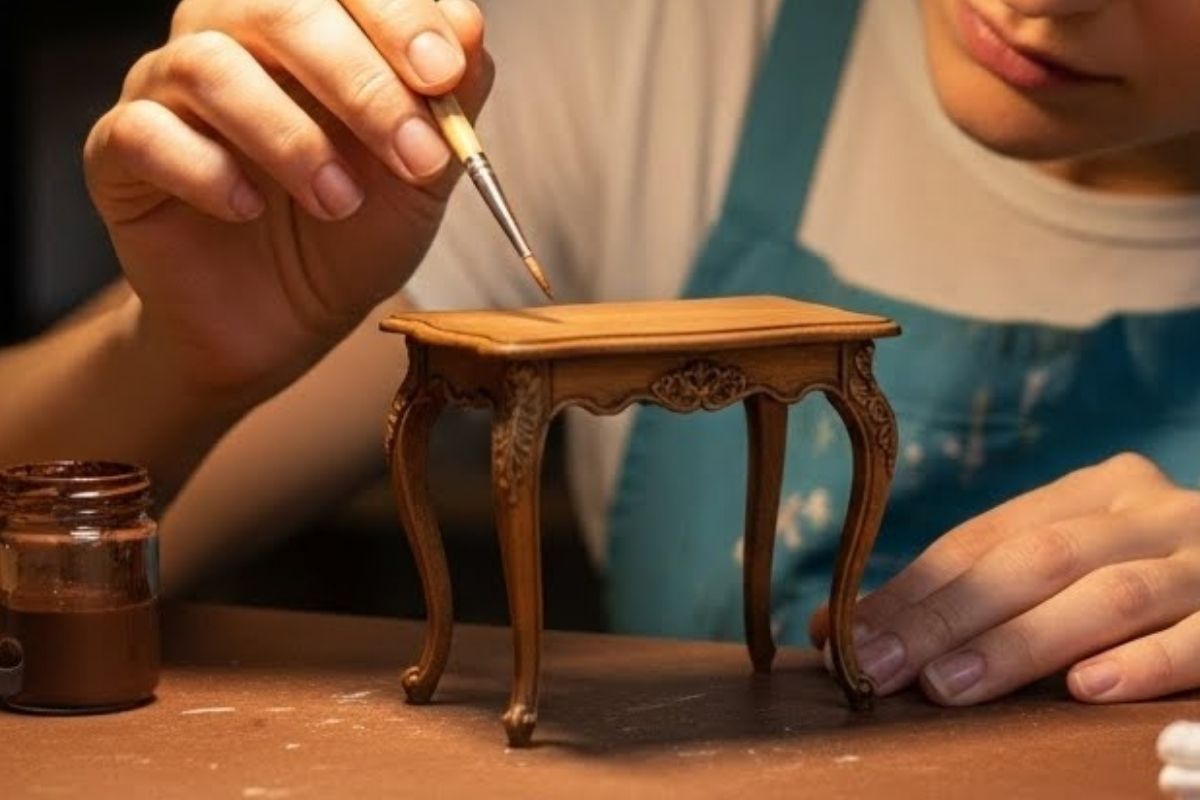
Another challenge is selecting paints that work well on small surfaces. Thick paint can obscure fine details, while too much water in acrylics can warp thin wood sheets. Getting the right balance requires experience.
Color choice is equally important. Certain shades may look great on full-size furniture but overwhelming or unrealistic when miniaturized. Miniature makers must develop an eye for scale-appropriate hues, subtle shading, and realistic aging techniques such as dry-brushing, staining, or weathering. Each paint layer must be thin and controlled to maintain clean edges.
7. The Time and Patience Required
Miniature crafting is not a fast hobby. Even the smallest piece of furniture may take hours due to the many steps involved—measuring, cutting, gluing, sanding, painting, and assembling. Beginners often feel discouraged when they do not see quick results.
However, patience is a defining skill in miniature art. The craft teaches focus, attention to detail, and perseverance. Learning to enjoy the process rather than rushing through it is a challenge that transforms your work from simple pieces into true works of art.
8. Gluing and Assembling Tiny Parts
Working with small components is one of the most difficult parts of making miniatures. Applying glue to tiny edges without creating smudges, drips, or excess stains requires a careful hand.
Common challenges include:
- Keeping pieces aligned while the glue dries
- Avoiding fingerprints on painted surfaces
- Ensuring joints stay strong despite the tiny contact areas
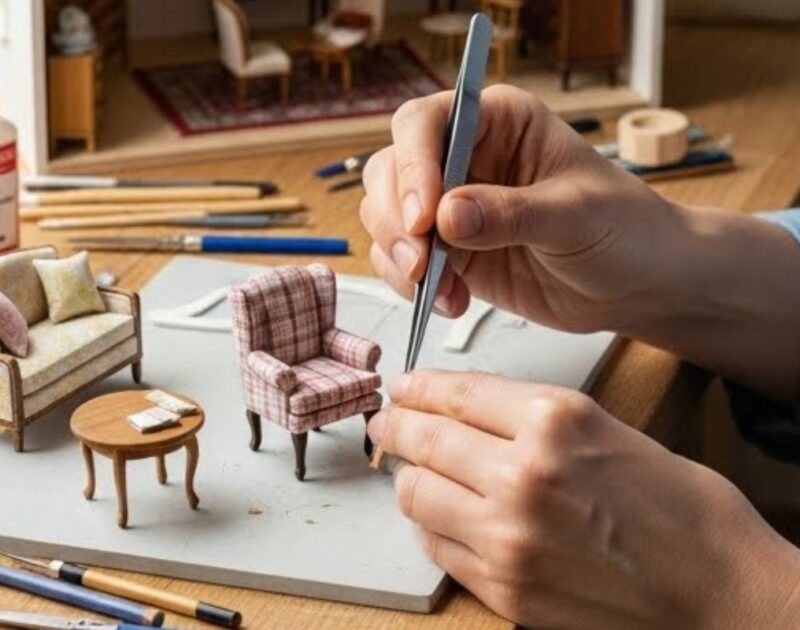
Tweezers, micro-brushes, and fast-drying wood glue can help, but the assembly process always requires steady hands and precision.
9. Designing Before Building
Before crafting furniture or decorating a room, miniature makers must sketch and plan their designs. Translating an idea into a working blueprint is challenging for beginners. Many struggle with proportions, functional details, or choosing the right joinery for miniature scale.
A clear design can save a lot of time and prevent wasted materials. Yet developing this skill requires practice and an understanding of how real furniture is built—just in a much smaller format.
10. Maintaining Style, Balance, and Realism
Creating a well-designed dollhouse involves more than crafting individual pieces. You must also consider color harmony, interior layout, furniture proportions, and overall aesthetic. Ensuring that everything in the room feels consistent and realistic can be difficult.
Miniature makers often face challenges like:
- Overcrowding small spaces
- Mixing incompatible styles
- Choosing decorations that look oversized or too small
Maintaining balance is an art in itself, and mastering it takes time.
11. Protecting and Storing Miniatures
Miniatures are delicate. Dust, sunlight, and humidity can damage them over time. Small pieces may break easily or get lost during storage or transportation.
Crafting a safe display solution is often just as important as making the miniature itself. Keepsake boxes, acrylic covers, or closed-frame displays help protect the work from damage. Learning how to preserve your creations is another challenge miniature artists must face.
Final Thoughts
Making dollhouse miniatures is a beautiful blend of creativity, craftsmanship, and patience. Although the process comes with many challenges—from precise measurements to fragile materials—each difficulty teaches valuable skills. As miniature makers develop confidence, they learn to transform simple materials into stunning, realistic pieces that capture imagination and bring tiny worlds to life.