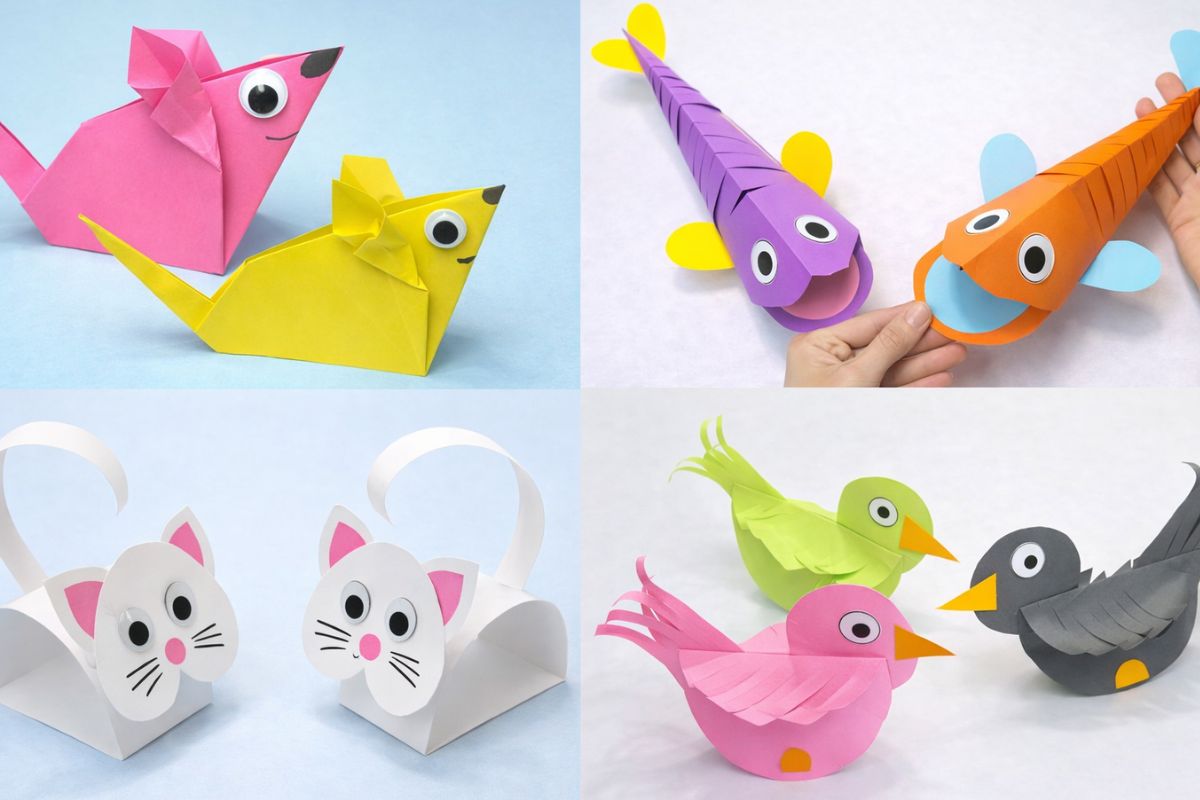
In today’s digital age, finding activities that engage children in a hands-on, creative way is more important than ever. DIY paper crafts for kids offer the perfect opportunity to spark imagination, develop fine motor skills, and encourage self-expression.
Paper, an easily accessible and inexpensive material, can be transformed into a wide variety of fun projects, making it a favorite medium for parents, teachers, and kids alike.
Why Paper Crafts Are Perfect for Kids
Paper crafts are more than just a fun pastime—they are a gateway to learning. Working with paper allows children to experiment with shapes, colors, and textures while developing essential skills. For young children, folding, cutting, and gluing paper enhances hand-eye coordination and fine motor skills. For older kids, paper crafts can introduce concepts like symmetry, geometry, and spatial awareness, all in an interactive and enjoyable way.
Moreover, paper crafts encourage problem-solving and creativity. When kids decide how to assemble a craft or combine colors, they are thinking critically about design, structure, and aesthetics. This type of creative thinking is crucial for cognitive development and can translate into improved performance in other areas of learning.
Benefits of DIY Paper Crafts
- Boosts Creativity: Paper is a versatile material that can be folded, cut, layered, and decorated in countless ways. Children can transform simple sheets of paper into anything their imagination allows, from colorful flowers to whimsical animals. The freedom to create encourages innovative thinking and artistic exploration.
- Encourages Patience and Focus: Completing a craft project requires concentration and attention to detail. Even a simple paper project teaches kids the value of patience, persistence, and following through on an idea. These skills are essential for academic success and personal growth.
- Promotes Family Bonding: DIY paper crafts are an excellent way for families to spend quality time together. Parents and children can collaborate on projects, share ideas, and celebrate the results. This interactive experience strengthens communication, teamwork, and family connections.
- Supports Emotional Expression: Crafting provides an outlet for children to express their emotions and ideas visually. Colors, shapes, and patterns can convey moods and thoughts that kids may not yet have words for, promoting emotional intelligence and self-awareness.
- Affordable and Accessible: Unlike other hobbies that require specialized tools or materials, paper crafts are budget-friendly and easy to access. All you need is paper, scissors, glue, and some basic supplies to get started, making it an ideal activity for home, school, or even on-the-go.
Popular Paper Craft Ideas for Kids
While the possibilities are endless, some types of DIY paper crafts for kids consistently capture attention:
- Paper Animals: Kids love creating animals from paper, which can range from simple cut-outs to more complex origami shapes. This introduces them to folding techniques and three-dimensional thinking.
- Paper Flowers: From roses to tulips, paper flowers are an enjoyable way for children to explore shapes, symmetry, and layering. They also make beautiful decorations for home or school.
- Greeting Cards: Designing personalized cards allows kids to combine creativity with emotional expression. They can use colors, drawings, and embellishments to convey messages to friends and family.
- Decorative Art Projects: Paper crafts can include collages, wall hangings, and mobiles. These projects encourage kids to experiment with patterns, textures, and color combinations.
Integrating Learning Through Paper Crafts
Paper crafts are not only fun but also educational. For instance, counting, measuring, and pattern-making can be integrated into craft projects, helping children practice mathematics in a playful and engaging way. Likewise, understanding symmetry and shapes contributes to early geometry skills, while exploring colors and design principles can foster artistic literacy.
Teachers and homeschooling parents often use paper crafts as a hands-on approach to teaching lessons. Projects can be themed around seasons, animals, cultural events, or storytelling, making learning more interactive and memorable.
Safety and Supervision Tips
While paper crafting is generally safe, supervision is important, especially for younger children. Scissors should be age-appropriate, and glue or other adhesives should be non-toxic. Clear guidance and encouragement help children work safely while still enjoying the creative process.
I came across this talented creator who seems very professional in making paper crafts. You can check out their video for some amazing ideas that are sure to inspire and help you with your own projects.
Conclusion
DIY paper crafts for kids are much more than a pastime—they are an investment in creativity, learning, and emotional growth. With simple materials, children can unlock a world of imagination, develop valuable skills, and enjoy hours of engaging fun. Whether at home, in the classroom, or as a family activity, paper crafts provide endless opportunities for artistic expression and hands-on learning.
To see exactly how these crafts come to life, watch the accompanying video where step-by-step guidance brings these exciting paper projects to life. Kids and parents alike will love seeing simple sheets of paper transform into colorful, imaginative creations!