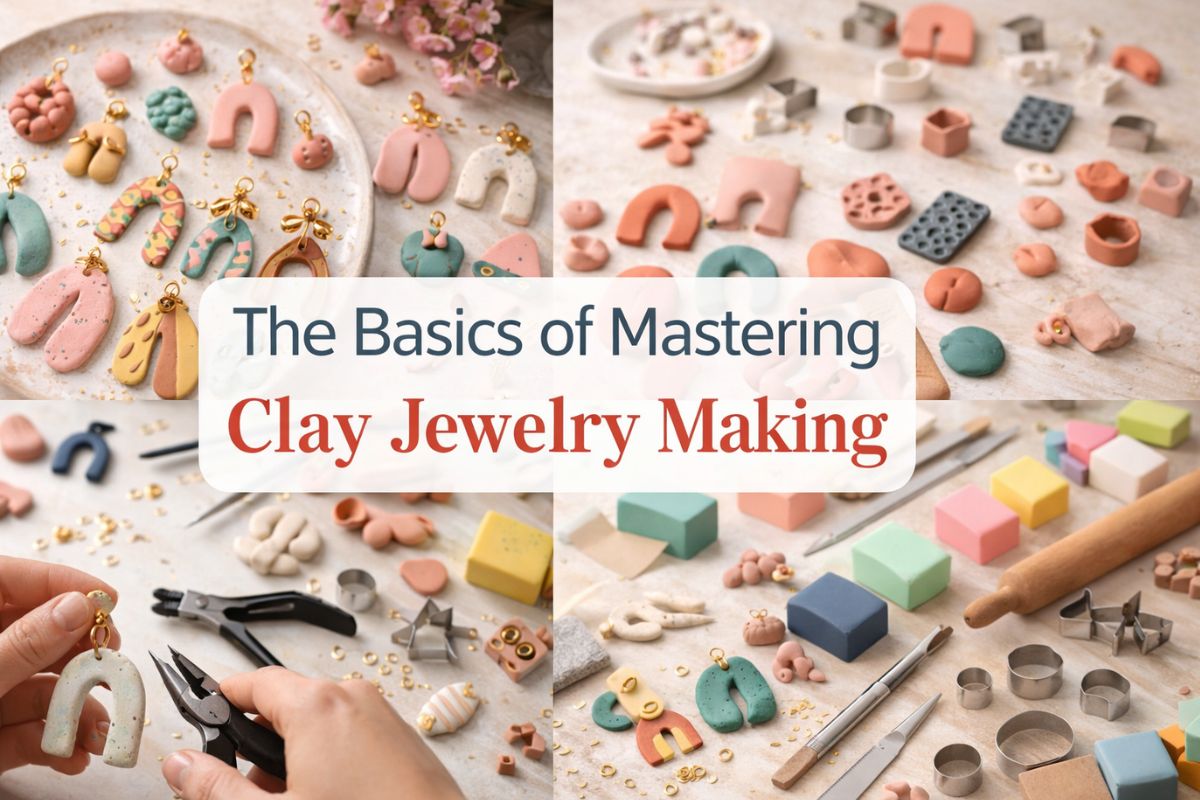
Clay jewelry has become increasingly popular due to its versatility, creativity, and accessibility. Whether you are a beginner or someone looking to refine your skills, understanding the fundamentals is essential to creating beautiful and professional-looking pieces.
| Product | Buy |
|---|---|
| Air Dry Clay |

|
| Clay Tools |
|
| Clay Shaper Tool |
|
| Magnets |
|
| Jewellery Materials |
|
| Acrylic Colours |
|
| Paint Brushes |
|
1. Choosing the Right Type of Clay
The first step in making clay jewelry is selecting the appropriate material. The most commonly used types include:
- Polymer clay: Ideal for beginners, as it is easy to shape and hardens when baked in an oven.
- Air-dry clay: Does not require baking but may be less durable.
- Epoxy clay: Strong and durable, often used for more advanced designs.
Polymer clay is the most popular choice because of its wide range of colors and ease of use.
2. Essential Tools and Materials
To get started, you will need a few basic tools:
- Rolling pin or acrylic roller
- Clay cutters or blades
- Toothpicks or sculpting tools
- Baking tray and parchment paper
- Jewelry findings (hooks, jump rings, chains)
Having the right tools will help you achieve cleaner shapes and more professional results.
3. Conditioning the Clay
Before shaping, clay must be softened and conditioned. This involves kneading it until it becomes smooth and pliable. Proper conditioning prevents cracks and ensures an even texture.
4. Shaping and Designing
This is where creativity comes in. You can:
- Cut geometric shapes (circles, arches, squares)
- Create patterns using stamps or textures
- Mix colors to produce unique designs
Keep your designs simple at first, then gradually experiment with more complex styles.
5. Baking and Curing
For polymer clay, baking is a crucial step. Follow the manufacturer’s instructions carefully regarding temperature and time. Overbaking can burn the clay, while underbaking may result in fragile pieces.
6. Sanding and Finishing
After baking, you can refine your pieces by:
- Sanding rough edges
- Buffing for a smooth finish
- Applying varnish or resin for shine and protection
This step greatly enhances the final appearance of your jewelry.
7. Assembling the Jewelry
Once your clay pieces are ready, attach them to jewelry findings:
- Add earring hooks or posts
- Use jump rings to connect pieces
- Attach to chains for necklaces
Make sure all components are securely fastened.
8. Practice and Personal Style
Like any craft, mastering clay jewelry takes practice. Over time, you will develop your own style and techniques. Don’t be afraid to experiment and learn from mistakes.
Conclusion
Clay jewelry making is a rewarding and creative craft that anyone can learn. By understanding the basics—choosing the right clay, using proper tools, and mastering shaping and finishing techniques—you can create unique and professional pieces. With patience and practice, your skills will continue to grow, opening the door to endless artistic possibilities.