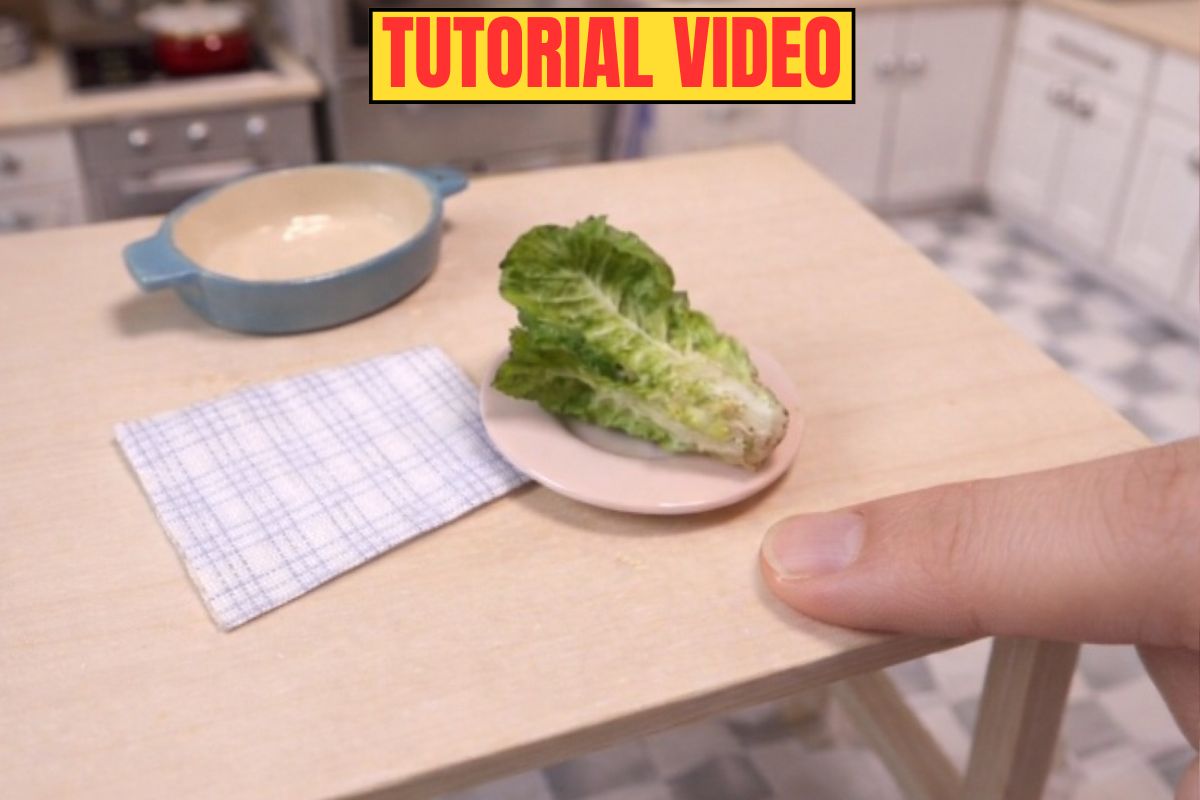
Miniature food has become an essential element in the world of dollhouses, miniatures, and scale models. Among all miniature foods, vegetables—especially lettuce—play an important role in creating realistic scenes. Miniature lettuce may seem like a small detail, but it adds life, freshness, and authenticity to miniature kitchens, markets, and dining tables.
| Product | Buy |
|---|---|
| Air Dry Clay |

|
| Clay Tools |
|
| Clay Shaper Tool |
|
| Magnets |
|
| Jewellery Materials |
|
| Acrylic Colours |
|
| Paint Brushes |
|
Why Miniature Food Is Important
Miniature food is important because it brings realism and emotion to a miniature scene. Furniture alone can look empty without food elements. When you add tiny vegetables like lettuce, tomatoes, or carrots, the scene instantly feels alive.
Miniature lettuce, with its layered leaves and natural shapes, helps tell a story—whether it’s a fresh harvest, a kitchen preparation scene, or a market display. These tiny details attract viewers and make them stop, look closely, and admire the craftsmanship.
In addition, miniature food is a great way for artists to show their skills. Creating something so small yet realistic requires patience, creativity, and precision. For collectors and miniature lovers, handmade food pieces are often the most memorable parts of a display.
Materials That Can Be Used to Make Miniature Lettuce
There are many materials that can be used to create miniature lettuce, depending on your style and budget. Polymer clay is one of the most popular choices. It is easy to shape, comes in many colors, and can be baked to become durable. Air-dry clay is another good option, especially for beginners, because it does not require an oven.
Other materials include paper, foam, fabric, and even recycled plastic. Some artists use tissue paper soaked in glue to create thin, realistic leaves. Acrylic paint or soft pastels are often used to add shading and depth, making the lettuce look fresh and natural. The beauty of miniature art is that you can experiment and use what you already have at home.
The Most Important Techniques
One of the most important techniques in making miniature lettuce is working in layers. Real lettuce is made of many leaves, so creating multiple thin layers is key. Each leaf should have a slightly different shape to avoid a flat or artificial look.
Texturing is another essential technique. Using simple tools like toothpicks, needles, or soft brushes can help create veins and natural imperfections. Painting is also very important—using different shades of green, and even a touch of yellow or white, gives the lettuce a realistic and fresh appearance.
Patience is the secret. Let each step dry properly and work slowly. Miniature work is not about speed, but about detail and care.
Making Is Better Than Buying
While miniature food can be purchased online, making it yourself is often better. Handmade miniature lettuce can be customized in size, color, and style to perfectly match your project. It is also more satisfying to create something with your own hands. Making your own miniature food is usually more affordable and allows you to improve your skills over time.
Each handmade piece is unique, which gives your miniature scenes a personal and artistic touch that store-bought items cannot always offer.
Learning Through Video Tutorials
To help you learn this process step by step, I will include a video from a skilled miniature food artist. Watching a video makes learning easier, especially for understanding techniques like shaping, layering, and painting. Seeing the process in action can inspire you and give you confidence to start creating your own miniature lettuce.
Miniature food making is a beautiful craft where small details create big impact. With simple materials, the right techniques, and a bit of patience, you can create stunning miniature vegetables that bring your miniature world to life.