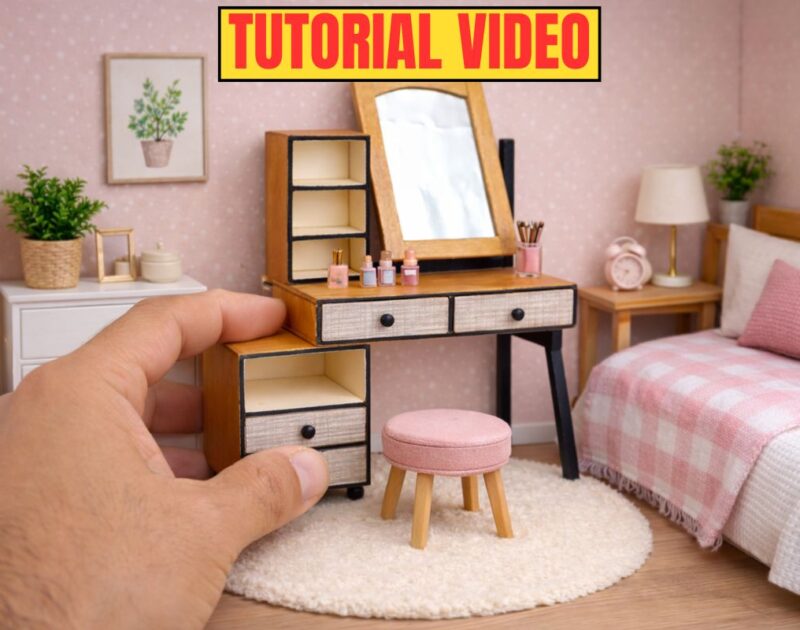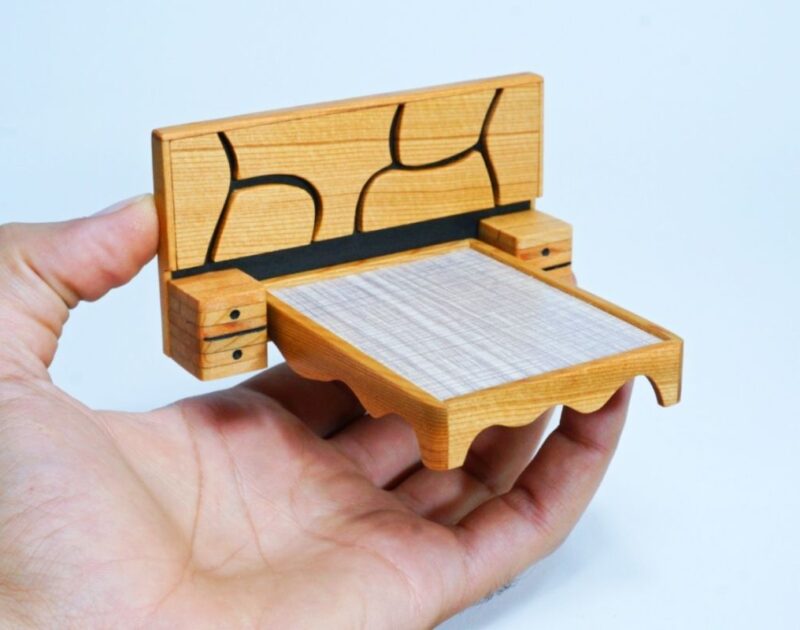
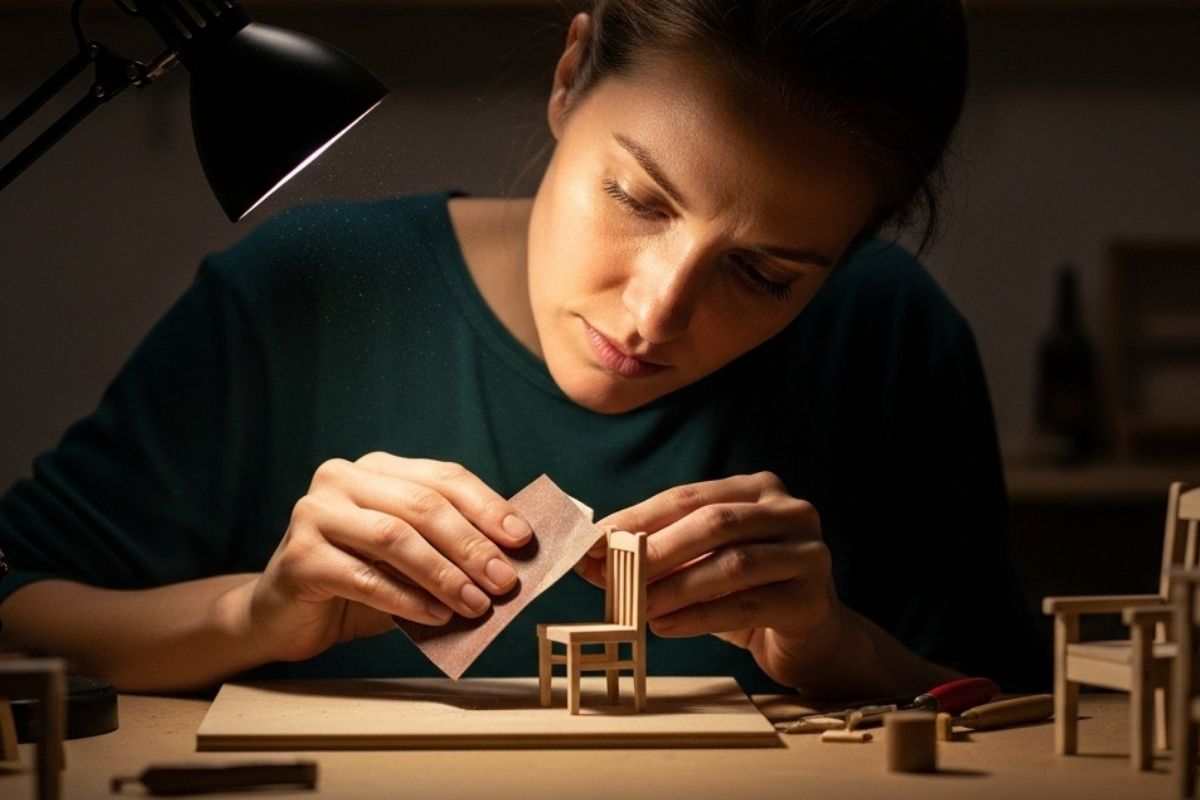
The world of miniatures brings together precision, creativity, and the joy of transforming wood, paper, and basic materials into tiny artistic pieces that beautifully reflect real life. As this craft continues to evolve, having the right tools becomes the first step toward creating successful and high-quality projects.
| Product | Buy |
|---|---|
| Rapid Wood Glue |

|
| Needle File |
|
| Sandpaper |
|
| Transparent Brown Stain |
|
| Wood Oil |
|
| Jeweler’s Saw |
|
| Small Table Saw |
|
| 12V Mini Drill |
|
Whether you’re a beginner taking your first steps or an experienced miniature maker with years of practice, knowing the essential tools will make your work easier and ensure a polished result every time.
In this article, I share with you—based on years of experience as a miniature maker—the most essential tools every artist in this field should have, along with the role of each tool and how it helps you step by step.
1. Craft Knife (Cutter / X-Acto Knife)
No miniature toolkit is complete without a precision craft knife. This tool is the backbone of your work and helps you with:
- Cutting thin wood (like balsa and lightweight plywood)
- Cutting paper and cardboard with accuracy
- Shaping small pieces
- Creating fine openings and intricate cuts
Always choose a knife with a comfortable grip and replaceable blades, as a sharp blade gives you clean cuts without damaging or tearing materials.
2. Metal Ruler
When working with tiny pieces, accurate measurement is crucial. A metal ruler is better than a plastic one because it:
- Doesn’t scratch easily
- Doesn’t wear out
- Protects your blade from slipping during cutting
It’s best to have both a 30 cm ruler and a smaller 15 cm one for tight spaces.
3. Sandpaper
Sanding is an essential part of achieving smooth and beautiful miniatures. Sandpaper helps you:
- Remove rough edges
- Smooth surfaces before painting
- Prepare wood to absorb paint or varnish more evenly
Keep different grits on hand (from 120 to 400), as each number provides a different level of smoothness.
4. Wood Glue and Liquid Silicone Glue
No project will hold together without strong adhesives. The most important types you need are:
Wood Glue
Ideal for building furniture and structures because it:
- Is very strong when dry
- Produces a clean finish
- Allows slight adjustment before fully setting
Liquid Silicone Glue
Perfect for light materials such as:
- Foam
- Paper
- Fabric
- Thin plastic
Having both types gives you flexibility in all your miniature projects.
5. 5mm Squared Measuring Paper
A tool many beginners overlook, but it makes a huge difference in accuracy. This paper helps you:
- Draw designs before building
- Maintain precise measurements
- Keep pieces consistent in scale
Whether you work in 1:12 or 1:6 scale, this paper will become one of your favorite tools.
6. Mini Craft Saw
Some wood pieces are too thick to cut with a knife. That’s when a mini craft saw becomes essential, as it provides:
- Straight and accurate cuts
- The ability to cut harder or thicker wood
- Better control without cracking the material
The best options are lightweight hand saws with fine teeth.
7. Precision Tweezers
Working with very tiny items like miniature nails, handles, or buttons requires precision tweezers. Use:
- Straight tweezers
- Curved tweezers
- Ultra-fine tip tweezers
These tools give you excellent control and help reach tight corners.
8. Fine Detail Paintbrushes
Miniatures cannot be painted with regular brushes. You need:
- Brush sizes 0 or 00
- Very small flat brushes
- Fine-tip brushes for details
High-quality brushes give you smoother, more professional paint results.
9. High-Quality Acrylic Paints
Acrylic paints are the best for miniatures because they:
- Dry quickly
- Are easy to blend
- Create smooth layers on wood
- Are durable and don’t crack
Start with basic colors (white, black, brown, ochre, gray), then expand your collection.
10. Mini Clamps
When gluing wooden parts together, the pieces can shift before the glue dries. Mini clamps prevent this by:
- Holding pieces firmly
- Keeping everything aligned
- Avoiding small distortions during drying
You can also use strong binder clips or wooden clothespins as alternatives.
11. Cutting Mat
A cutting mat protects your workspace and provides:
- Built-in measurement lines
- A scratch-resistant surface
- Stability for cutting without slipping
Choose A3 or A4 size depending on your working area.
12. Mini Carving Tools
If you work on advanced details, small carving tools are extremely helpful for:
- Shaping decorative lines
- Engraving fine details
- Adding textures and realistic elements
They are not essential for beginners, but very valuable for more advanced creators.
Choosing the right tools is the first step toward creating professional miniatures. Tools don’t make you an artist—but they give you the structure and precision needed to bring your ideas to life. Quality comes from practice, attention to detail, and using the right tool for the right task.
Whether you’re building miniature furniture, decor pieces, or full dollhouses, having these essential tools will make your journey easier, faster, and more creative.