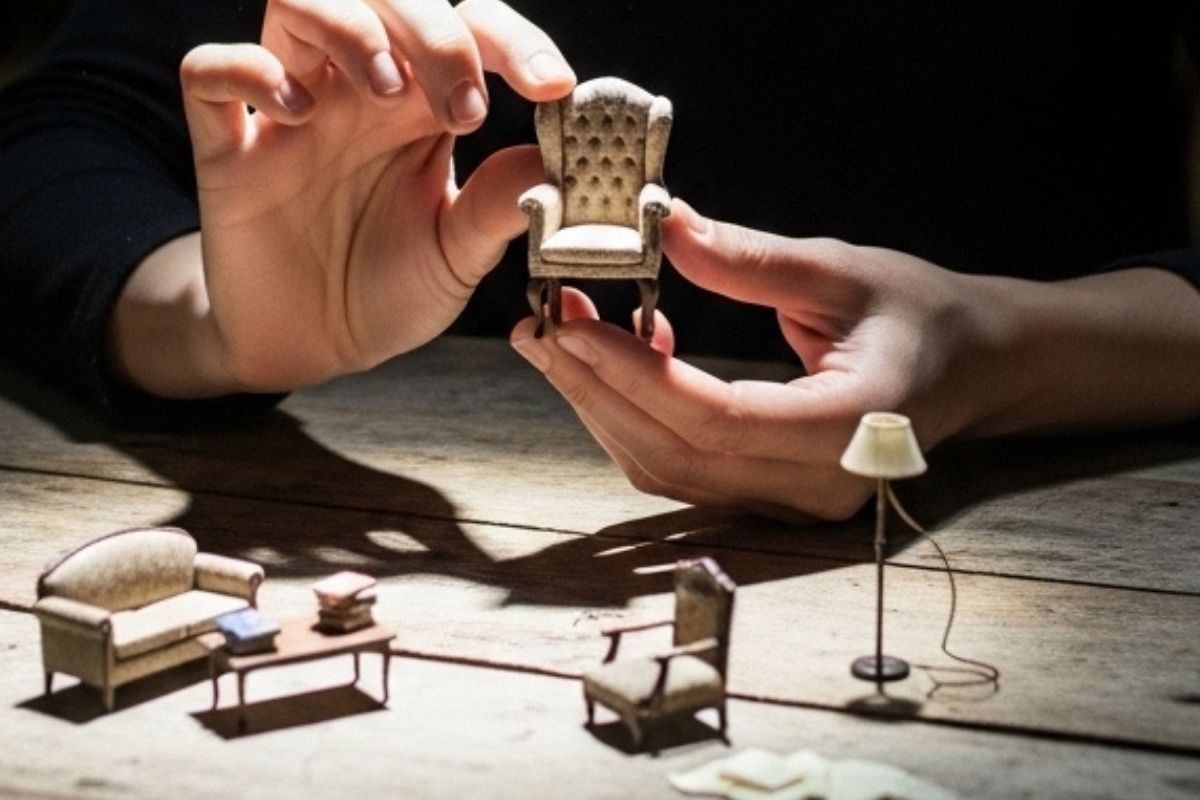
Choosing the scale is one of the most important decisions a miniature maker makes before starting any new project. Scale doesn’t just determine the size of the piece or furniture—it directly affects every stage of creation: from the design, to the materials, to the final finishing techniques. Understanding how scale influences your work will help you create pieces that are more realistic, balanced, and visually appealing.
Since you’ve been crafting wooden miniatures for years and sharing your experience through your website and social media platforms, explaining the importance of scale helps beginners avoid common mistakes, and provides professionals with a solid foundation to elevate their craftsmanship.
I rely on a set of trusted tools that help achieve professional-looking results in miniature woodworking:
- Sandpaper – to smooth edges and prepare surfaces.
- Transparent brown stain – to bring out the natural beauty of the wood grain.
- Wood oil – to protect and enhance the finish.
- Jeweler’s saw – for delicate and precise cuts.
- Small table saw – to speed up straight cuts.
- 12V mini sander – for quick, clean smoothing.
1. What Is Scale and Why Does It Matter?
Scale is the ratio between the miniature and the real object. For example, a 1:12 scale means that every 1 cm in the miniature equals 12 cm in reality. This makes scale the first step that determines the size of the dollhouse, the furniture, the accessories, and even the tools you will need.
Its importance lies in being the “common language” among miniature makers. It ensures that your pieces can be combined with other makers’ elements, and it makes it easier for hobbyists to add ready-made furniture or 3D printed items without size inconsistencies. Scale is the core factor that shapes the level of detail and the visual possibilities of any miniature project.
2. How Scale Affects the Level of Detail
The smaller the scale… the smaller everything becomes—including the amount of detail you can realistically add.
1:12 Scale – Most Popular, Most Detailed
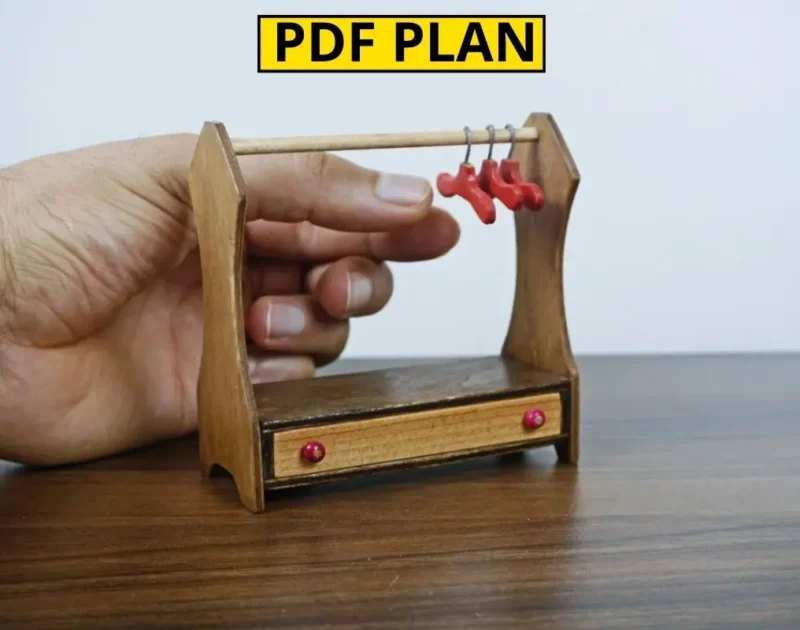
This is the most common scale, especially for wooden miniature furniture.
- Allows fine details such as door handles, joints, wood carving, and tiny books.
- Works perfectly with real wood since the space is large enough to carve, shape, and sand without breaking.
- You can create movable elements like drawers and miniature hinges.
If you want to show craftsmanship and impressive woodwork, this scale is the best way to highlight your skills.
1:24 Scale – Fewer Details, Higher Precision
This scale is half the size of 1:12, which adds some challenges:
- Details become more simplified.
- Carvings must be minimal, often replaced by painted illusions.
- Requires more precise tools; laser cutting and 3D printing become helpful.
A good choice for medium-sized projects without losing all the detailing.
1:48 Scale – Tiny Work That Changes the Rules
Here the world becomes extremely small:
- Extremely detailed work is hard to achieve by hand.
- Printed textures and stickers replace carving.
- The focus shifts from micro-detail to overall form.
Loved by collectors who enjoy tiny scenes and micro dollhouses.
3. How Scale Affects the Materials You Use
Scale doesn’t only define the look—it defines what materials will work.
Wood
Since you specialize in wooden miniatures, this part is essential:
- 1:12 scale works with 2–3 mm wood; strong, durable, looks realistic.
- 1:24 scale needs thinner wood, around 1–1.5 mm.
- 1:48 often replaces real wood with card stock or plastic, because wood becomes too fragile.
Choosing the right thickness makes the piece look proportional and realistic.
Paper & Cardstock
The smaller the scale, the more valuable paper becomes:
- In 1:48, cardstock is ideal for doors and frames.
- Entire pieces of furniture can be made from thick paper if durability isn’t the main goal.
Metal
Used for handles and hinges:
- 1:12: real miniature hinges can be used.
- 1:24: thin metal strips or laser-cut metal elements work best.
- 1:48: hinges are often replaced by painted gold dots!
Fabric
Fabric is essential for chairs, curtains, and rugs:
- 1:12: normal fabric works well.
- 1:24: fabric must have a very fine weave.
- 1:48: paper textures often replace real fabric.
4. How Scale Influences Time and Tools
Each scale has different requirements:
- Larger scale = more material + more details + longer build time
- Smaller scale = less material + higher precision + very small tools
A chair in 1:12 may take two hours to make.
The same chair in 1:48 might take 30 minutes—but with much higher concentration.
5. How to Choose the Right Scale
A simple rule used by experienced miniature makers:
- Want to show craftsmanship? → Choose 1:12
- Want a full dollhouse that isn’t too big? → Choose 1:24
- Want a tiny scene or decorative gift? → Choose 1:48
The scale depends on your purpose:
- For teaching → 1:12
- For small collections → 1:24
- For tiny decorative pieces → 1:48
Choosing the right scale is not just a size decision—it’s a key element that influences every detail of the miniature: the materials, the realism, the time needed, the techniques, and even your ability to showcase your craftsmanship.
Understanding how each scale affects the process allows you to pick the perfect scale for your project, your audience, and your creative goals as a miniature artist.