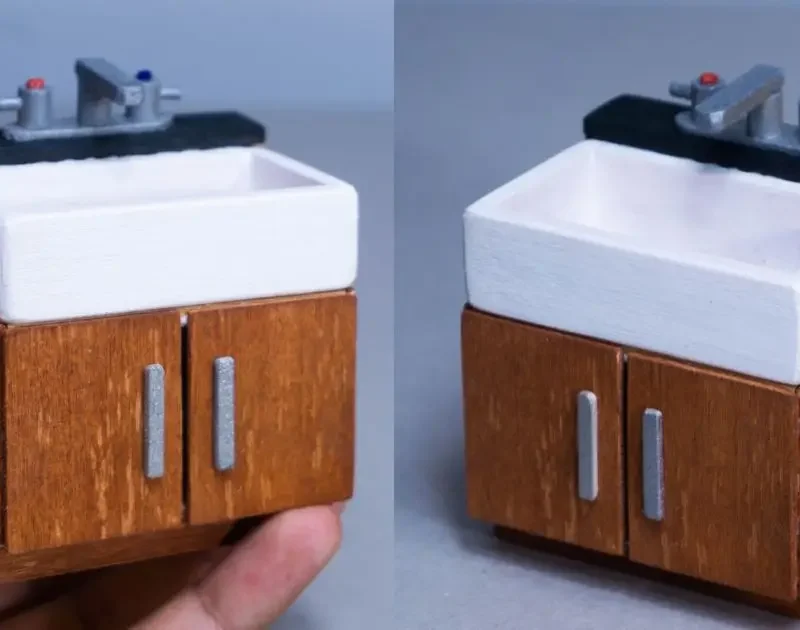

Creating accurate miniatures is not only about craftsmanship—it is also about precision in measurement. Whether you are building dollhouse furniture, miniature rooms, or collectible pieces, understanding how to correctly convert real-life dimensions into miniature scale is essential. In this guide, we will explore the most important principles, tools, and common mistakes involved in taking and converting measurements for miniatures.
| Product | Buy |
|---|---|
| Rapid Wood Glue |

|
| Needle File |
|
| Sandpaper |
|
| Transparent Brown Stain |
|
| Wood Oil |
|
| Jeweler’s Saw |
|
| Small Table Saw |
|
| 12V Mini Drill |
|
Converting Measurements from Real Size to Miniature Scale
The first step in making accurate miniatures is understanding scale conversion. The most commonly used scale in dollhouse miniatures is 1:12, which means that 1 unit in miniature equals 12 units in real life.
For example:
- A real table that is 120 cm long becomes 10 cm in 1:12 scale.
- A real chair that is 90 cm high becomes 7.5 cm in miniature.
Simple Conversion Formula
To convert real measurements to miniature:
Real measurement ÷ Scale factor = Miniature measurement
Using this formula consistently helps maintain proportion and realism. Always write down your calculations instead of relying on memory or estimation.
Common Mistakes in Understanding Scale and How to Avoid Them
Many beginners misunderstand scale, leading to miniatures that feel “off” even if the craftsmanship is good.
Mixing Scales
One of the most common mistakes is mixing different scales in one project—for example, combining 1:10 accessories with 1:12 furniture. This immediately breaks realism.
How to avoid it:
- Choose one scale and stick to it throughout the entire project.
- Label your drawings and measurements clearly with the scale used.
Forgetting Human Proportions
Furniture must match not only measurements but also the imaginary human figure that would use it.
Tip: Always imagine a 1:12 adult figure sitting, standing, or reaching objects when designing furniture.
Using Real Furniture or Original Plans as References
One of the best ways to ensure accuracy is to measure real furniture or use original architectural plans.
Measuring Real Furniture
If possible, take direct measurements from:
- Chairs
- Tables
- Cabinets
- Doors and windows
This provides realistic proportions that photos alone cannot offer.
Using Original Plans
Architectural drawings and furniture blueprints are excellent references because they already contain precise dimensions. Converting these plans to scale gives your miniatures a professional and realistic appearance.
The Importance of Visual Proportion, Not Just Numbers
While measurements are critical, visual harmony is just as important.
Sometimes a piece can be technically correct in scale but still look wrong. This happens because:
- The furniture looks too bulky
- Legs are too thick
- Decorative elements are oversized
Visual Adjustment
After converting measurements:
- Compare the miniature to surrounding objects
- Adjust thicknesses slightly if needed
- Trust your experienced eye, especially after building many miniatures
Miniature making is both mathematics and art.
Essential Tools for Accurate Measurement
Precision Metal Ruler
A metal ruler with millimeter markings is essential. Plastic rulers can warp, and wooden ones may not be precise enough.
Why metal rulers are better:
- Sharp, accurate edges
- Long-lasting precision
- Ideal for cutting and marking
Fine Pencil and Notebook
Always use a fine-tip pencil and keep a dedicated notebook for measurements.
Write down:
- Original measurements
- Converted scale measurements
- Notes about material thickness
This habit prevents mistakes and saves time later.
Graph Paper or Simple Drawing Software
Using graph paper or a simple drawing program allows you to visualize your project before cutting any material.
Benefits include:
- Seeing proportions clearly
- Planning joints and details
- Avoiding costly material waste
Even simple hand drawings are extremely effective when clearly labeled.
Label Every Measurement on Your Drawing
One critical habit of professional miniature makers is labeling every measurement.
Do not assume you will remember:
- Length
- Width
- Height
- Thickness
Label everything clearly on your drawing. This becomes especially important in complex projects like cabinets or desks with drawers.
Common Measurement Mistakes to Avoid
Ignoring Material Thickness
This is one of the biggest mistakes in miniature making.
For example:
- If you design a cabinet without accounting for wood thickness, the interior space will be smaller than planned.
- Drawers may not fit properly.
Solution:
Always subtract material thickness from interior dimensions during the planning stage.
Relying Only on Visual Estimation
Estimating “by eye” may work for decoration, but not for structure.
Problems caused by estimation:
- Uneven furniture
- Misaligned joints
- Poor fit between parts
Rule: Measure everything, even small details.
Not Testing Measurements Practically
Many makers skip test fitting, which leads to frustration later.
Always:
- Cut a test piece from scrap material
- Dry-fit parts before gluing
- Check proportions with other miniature items
This step alone can save hours of rework.
Final Thoughts
Accurate measurement is the foundation of high-quality miniatures. By understanding scale conversion, avoiding common mistakes, using real references, and relying on proper tools, you can dramatically improve the realism and professionalism of your work.
Remember:
- Precision builds credibility
- Planning saves materials
- Visual harmony completes the illusion
Miniature making is not just about making things small—it is about making them believable.