Miniature art has captivated human imagination for centuries. From the ornate illustrations of ancient manuscripts to today’s ultra-realistic dioramas and 3D-printed creations, miniatures continue to be a unique form of artistic expression.
I rely on a set of trusted tools that help achieve professional-looking results in miniature woodworking:
- Sandpaper – to smooth edges and prepare surfaces.
- Transparent brown stain – to bring out the natural beauty of the wood grain.
- Wood oil – to protect and enhance the finish.
- Jeweler’s saw – for delicate and precise cuts.
- Small table saw – to speed up straight cuts.
- 12V mini sander – for quick, clean smoothing.
But with such a rich history and an equally innovative present, many enthusiasts ask an important question: Which is better—old miniatures or modern ones? The answer depends entirely on what we value most: historical beauty, craftsmanship, storytelling, realism, accessibility, or innovation.
This article explores the differences between old and modern miniatures through history, techniques, aesthetics, market value, and cultural significance—helping us understand why each category still matters in the creative world.
1. Understanding What “Old Miniatures” Really Are
Old miniatures do not refer to small furniture or handmade crafts as we know them today. Historically, miniatures were highly detailed illustrations created for manuscripts, especially in the Middle Ages and Renaissance. They appeared in religious texts, royal documents, and scientific books—almost like ancient versions of illustrated guides.
These miniatures were tiny yet incredibly detailed. Artists used fine brushes, natural pigments, and sometimes even gold leaf to create glowing, intricate scenes. Every stroke was intentional. Every detail was a symbol of cultural or historical significance.
Over time, miniature art expanded to include:
- portrait miniatures (small painted portraits)
- war-game figures
- small wooden or metal artefacts
- architectural miniatures in palaces and museums
In essence, old miniatures focused on documentation, storytelling, and cultural representation.
2. What Defines Modern Miniatures?
Modern miniatures represent a much broader category. Today, the term includes:
- dioramas
- resin figures
- polymer clay food miniatures
- dollhouse furniture
- 3D-printed collectibles
- film miniatures for cinematography
- miniature photography
- tabletop gaming pieces
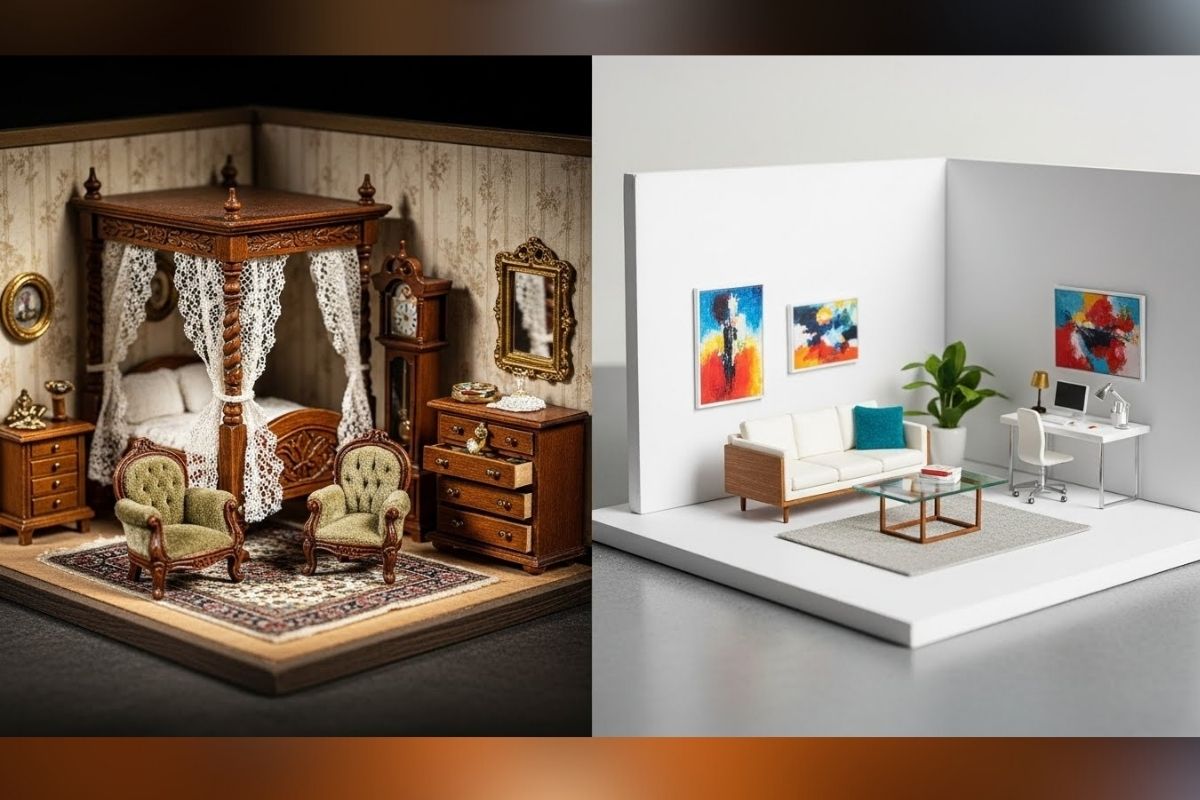
Modern miniatures no longer belong only to museums or manuscripts—they are part of our daily creative world. Artists, hobbyists, and content creators use them for décor, entertainment, education, and storytelling. The modern miniature movement emphasizes realism, creativity, and artistic freedom, supported by advanced tools and global online communities.
3. Historical Evolution: From Manuscripts to Modern Craft
The development of miniature art reflects how human creativity evolves with technology.
In ancient times, miniatures were:
- rare
- sacred
- labor-intensive
- exclusive to religious institutions and royalty
They required years of study and costly materials. Only elite scribes and painters mastered the technique.
In the modern era, miniatures became:
- accessible
- diverse
- technological
- widely shared on social media
Digital tools, photography, YouTube tutorials, and affordable materials democratized miniature crafting. Anyone can learn, practice, and innovate—even from home.
This transformation shows the journey from preservation and representation in the past to creation and expression in the present.
4. Techniques: Traditional vs. Modern Craftsmanship
One of the clearest differences between old and new miniatures lies in the techniques and tools used.
Traditional Techniques
Old miniature artists relied on:
- natural pigments (plants, minerals)
- parchment or vellum (animal skin)
- brushes made from animal hair
- gold leaf for illumination
- quills for delicate lines
The process was slow and required extraordinary precision. Artists could spend weeks on a single page, layering colors carefully and ensuring every element remained small yet recognizable.
Modern Techniques
Modern miniature creators use:
- acrylic paints
- polymer clay
- resin and silicone molds
- laser cutters
- 3D printers
- airbrushing
- digital sculpting software (like Blender or ZBrush)
These tools allow unprecedented accuracy. A modern artist can craft realistic textures—wood grain, fabric fibers, metal shine—that were impossible in the past.
While traditional techniques emphasized patience and devotion, modern techniques highlight innovation and hyper-realism.
5. Artistic and Aesthetic Value
Art lovers often debate which type of miniature offers more aesthetic value—old or new. The truth is that they shine in different ways.
The charm of old miniatures lies in:
- their historical rarity
- their symbolic richness
- the handmade imperfection that feels alive
- limited color palettes and traditional artistic rules
- spiritual or cultural depth
An old miniature is not just a tiny painting; it is a glimpse into history.
Modern miniatures, on the other hand, offer:
- realism that mimics real-life objects
- emotional storytelling through scenes and dioramas
- experimentation with materials and techniques
- cinematic lighting, shadows, and photography
- bold creativity beyond traditional rules
Modern miniatures can look so real that viewers need to zoom in to confirm they are small objects—not life-sized.
Both styles offer beauty. The difference is between historical poetry and visual realism.
6. Uses Across Time: Documentation vs. Expression
Old miniatures had specific purposes:
- illustrating religious texts
- recording royal life
- showing scientific concepts or geography
- teaching through images
- representing historical events
They were functional art pieces.
Modern miniatures serve different purposes:
- creative hobbies and self-expression
- content creation (photos, videos, stop-motion films)
- home décor
- collectible items
- tabletop and board gaming
- movie production (miniature sets used in many films)
- artistic exhibitions
Miniatures today are a mix of craft, entertainment, and storytelling.
7. Realism: A Modern Advantage
Realism is one area where modern miniatures clearly excel. Thanks to advanced tools such as:
- LED lighting
- airbrushing
- 3D modeling
- micro-tools
- high-quality paints
artists can replicate real-life textures perfectly.
From tiny wooden tables to miniature food that looks edible, modern creators push the limits of detail. Shadows, reflections, and depth appear more natural thanks to modern lighting techniques.
Old miniatures were expressive and symbolic, but they rarely aimed for photorealism. Instead, they followed artistic traditions and stylistic rules.
This is why modern miniatures often feel more immersive.
8. Market Value and Collectability
The market for miniatures is diverse, and value depends heavily on the category.
Old Miniatures:
- extremely rare
- often found only in museums or private collections
- historically significant
- expensive due to age and craftsmanship
Collectors value them for their heritage, not just their beauty.
Modern Miniatures:
- accessible to everyone
- growing rapidly thanks to social media
- popular among hobbyists and content creators
- valued for creativity and realism
Artists can also build careers selling miniature furniture, décor pieces, dollhouse sets, or digital miniature designs. The boom of resin art, 3D printing, and polymer clay makes modern miniatures highly marketable.
While old miniatures dominate historical auctions, modern ones dominate online marketplaces and creative industries.
9. Learning Curve and Accessibility
Learning old miniature techniques requires years of dedicated study. Many traditional materials are no longer easily available, and the artistic schools that once taught these methods have disappeared.
Modern miniatures are far more accessible:
- thousands of tutorials online
- affordable materials
- supportive communities
- simple techniques for beginners
- advanced techniques for professionals
Anyone can start, improve, and eventually master miniature art.
This accessibility is one of the biggest reasons why modern miniatures are more popular today.
10. Sustainability and Materials
Sustainability is becoming a more important factor in art.
Old miniatures used natural materials, which were eco-friendly but required resources like parchment and precious metals.
Modern miniatures use plastics, resin, and synthetic paints—some of which can be harmful to the environment. However, modern creators increasingly use:
- recycled materials
- biodegradable clay
- eco-friendly 3D-printing filaments
- sustainable wood
Sustainability depends on the artist’s choices, not on the art form itself.
11. So, Which Is Better—Old or Modern Miniatures?
The answer depends on what you appreciate most.
Choose Old Miniatures if you value:
- historical significance
- cultural depth
- rare craftsmanship
- ancient symbolism
- traditional artistic techniques
Choose Modern Miniatures if you value:
- creative freedom
- hyper-realistic details
- innovative materials and tools
- accessibility and easy learning
- content creation and storytelling
Many artists today combine both worlds—preserving the elegance of traditional styles while using modern tools. This fusion creates a new artistic category often called Neo-Miniature Art.
Conclusion
Old and modern miniatures are not rivals; they are chapters in the same creative story. Old miniatures give us a window into our past—the beliefs, cultures, and craftsmanship of earlier civilizations. Modern miniatures, on the other hand, open new doors of expression, innovation, and realism.
Both types hold immense artistic value. Both inspire. And both deserve admiration.
In the end, the choice between old and modern miniatures depends on what speaks to your soul: the magic of history or the magic of innovation.