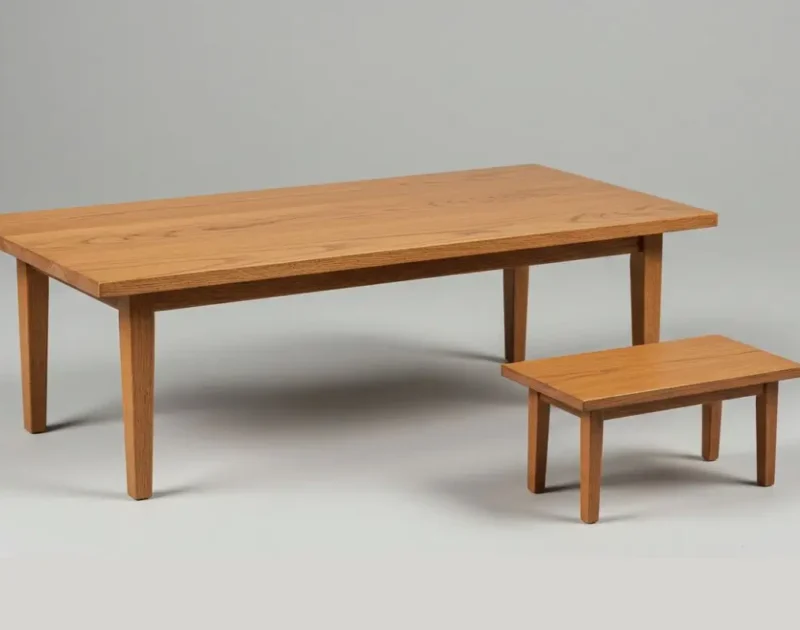

Miniature furniture has a unique charm—it captures the beauty of real craftsmanship in a tiny, delicate form. In this article, I will share my experience making a 1:12 scale miniature wooden garden table for a dollhouse,
explain why this scale is so important, and offer practical insights for anyone who wants to learn miniature woodworking. My goal has always been not only to create, but also to help others learn and enjoy the art of miniatures.
I rely on a set of trusted tools that help achieve professional-looking results in miniature woodworking:
- Sandpaper – to smooth edges and prepare surfaces.
- Transparent brown stain – to bring out the natural beauty of the wood grain.
- Wood oil – to protect and enhance the finish.
- Jeweler’s saw – for delicate and precise cuts.
- Small table saw – to speed up straight cuts.
- 12V mini sander – for quick, clean smoothing.
Why I Love Making Miniatures and Teaching Others
Over the years, miniature woodworking has become more than a hobby for me—it is a passion. I truly believe that knowledge grows when it is shared. That is why I enjoy documenting my projects and explaining each step clearly, so beginners and enthusiasts alike can learn from real experience.
Helping others understand how miniatures are made, what tools are used, and how to avoid common mistakes gives meaning to every project I complete. This miniature garden table is one example of how simple materials, patience, and creativity can result in something beautiful.
Why the 1:12 Scale Is So Important
The 1:12 scale is the most popular scale in the world of dollhouses and miniatures. It means that 1 inch in miniature equals 12 inches in real life. This scale is widely used because it offers the perfect balance between detail and practicality.
Furniture at this scale is large enough to include realistic details, yet small enough to fit comfortably inside a dollhouse or garden scene. Choosing the correct scale ensures harmony between all miniature elements and makes the final scene look believable and professional.
Designing a Miniature Wooden Garden Table
This project focuses on a miniature wooden table designed for a dollhouse garden. Outdoor furniture requires a simple but sturdy design, even in miniature form. Before cutting any wood, I carefully planned the proportions, height, and thickness to stay true to the 1:12 scale.
Attention to detail is essential. Even a small mistake can throw off the realism. Measuring twice and cutting once is a rule I always follow in miniature woodworking.
Choosing the Right Wood: Cedar and 3mm Thickness
For this project, I chose cedar wood, which is lightweight, easy to work with, and has a beautiful natural grain. Cedar is also commonly associated with outdoor furniture, making it a perfect choice for a garden table.
I used 3mm thick wood, which is ideal for miniature furniture. It is thin enough to cut easily and shape accurately, yet strong enough to hold its form once assembled. For beginners, 3mm wood is highly recommended because it reduces cutting difficulty and improves precision.
The Importance of a Small Table Saw
A small table saw played a very important role in this project. Miniature furniture requires clean, straight cuts, and hand-cutting alone can be challenging at this scale. The table saw allowed me to cut consistent pieces with accuracy and speed.
Using proper tools not only improves the final result but also makes the building process more enjoyable and less frustrating.
Precision, Patience, and Creativity
Miniature woodworking is not just about tools—it is about precision, patience, and creativity. Working at a small scale demands focus and calm hands. Rushing a step often leads to mistakes that are difficult to fix.
Creativity comes into play when adapting designs, solving small problems, or adding personal touches that make each piece unique. These three elements together are what transform simple wood into miniature art.
Finishing with Natural Wood Oil
Once the table was assembled, I applied a final finish using wood oil. This step enhances the natural color and grain of the cedar while protecting the wood. Oil finishes are ideal for miniatures because they do not create thick layers that hide fine details.
After the oil dried, the table gained a warm, realistic look that perfectly suits a dollhouse garden scene.
Safety First: Working with Sharp Tools
Even though the pieces are small, the tools are sharp and powerful. It is very important to pay attention when using cutting tools, especially table saws and blades. Always keep your fingers at a safe distance, work slowly, and never rush a cut.
Safety should always come first, no matter the size of the project.
Learn Step by Step: Video Tutorial Available
For those who prefer visual learning, there is also a step-by-step video tutorial showing how to make a miniature bed. While it is a different piece of furniture, the techniques, tools, and principles are very similar and can help beginners gain confidence.

A Thank You to My Followers
Finally, I would like to thank all my followers and supporters. Your comments, questions, and encouragement motivate me to continue creating and sharing my knowledge. This journey in miniature woodworking would not be the same without your support.
Miniatures may be small, but the passion behind them is truly big.