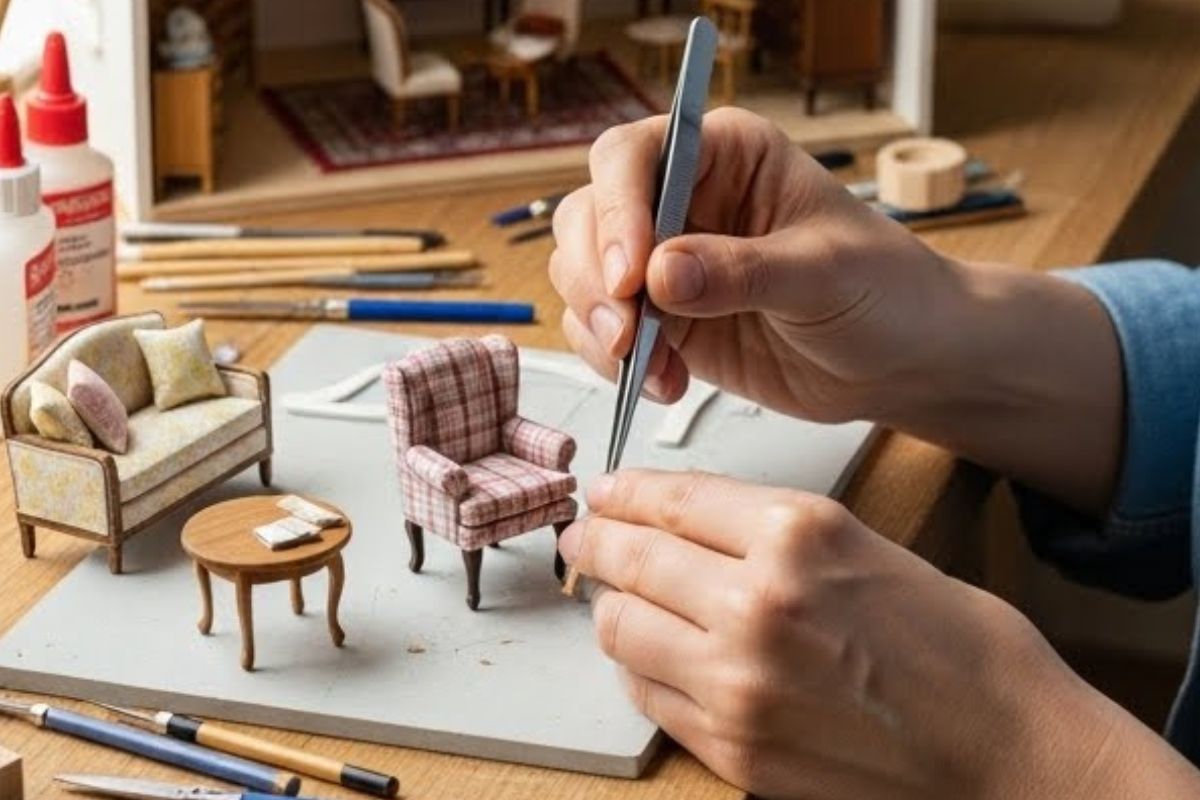
Miniature art has gained massive popularity in the age of social media. Platforms like Instagram, YouTube, Pinterest, and TikTok are filled with beautiful miniature rooms, tiny furniture, and detailed scenes that capture attention instantly. Millions of people enjoy watching these creations every day.
| Product | Buy |
|---|---|
| Rapid Wood Glue |

|
| Needle File |
|
| Sandpaper |
|
| Transparent Brown Stain |
|
| Wood Oil |
|
| Jeweler’s Saw |
|
| Small Table Saw |
|
| 12V Mini Drill |
|
Watching miniature art online is important. It inspires, educates, and opens the door to a fascinating creative world. However, watching alone is not enough to achieve similar results. True progress in miniature art comes only through practice, repetition, and patience.
Social media has turned miniature art into a visual experience. Short videos show smooth cuts, perfect finishes, and stunning final results. For viewers, this can feel magical. It creates the impression that miniature making is easy and quick.
In reality, what we see online is often the result of years of practice. Behind every polished miniature piece are many failed attempts, broken parts, and lessons learned through trial and error. Viewers must understand that mastery is built, not instantly achieved.
Watching miniature art content plays an important role in learning. Tutorials, time-lapse videos, and step-by-step guides help beginners understand tools, materials, and techniques. Observation helps train the eye to notice proportions, details, and finishing methods.
But observation without action has limits. Skills cannot develop by watching alone. Hands must repeat the movements, make mistakes, and correct them. Only through doing can knowledge turn into real ability.
Many beginners feel discouraged when their first attempts do not match what they see online. This comparison can be harmful if not understood correctly. Social media often shows the best results, not the full process.
Patience is essential at this stage. Early work will look rough, and that is normal. Every miniature artist starts somewhere. Improvement comes gradually with time, not overnight.
Practice builds confidence. The more an artist works with wood, glue, paint, and tools, the more control they gain. Small improvements add up: cleaner cuts, better alignment, smoother finishes.
These changes may seem slow, but they are powerful. Each project, even an imperfect one, moves the artist forward. This is the hidden progress that social media does not always show.
Another challenge is the illusion of speed. Social media videos are often edited and shortened. A project that took several days may appear as a one-minute clip. This can create unrealistic expectations for viewers.
Understanding this helps reduce frustration. Miniature art is slow by nature. Taking time is not a weakness; it is part of the craft. Rushing usually leads to poor results and disappointment.
For those who want results similar to what they watch online, commitment is required. Regular practice, even for a short time each day, is more effective than long sessions done occasionally.
Consistency trains both the hands and the mind. Over time, techniques become natural, and personal style begins to appear. This is when real progress becomes visible.
Social media should be used as a learning tool, not a measuring stick. Instead of comparing final results, viewers should focus on learning techniques and understanding processes.
By saving tutorials, repeating projects, and practicing patiently, viewers can transform inspiration into skill. The journey is long, but it is rewarding.
In the end, watching miniature art on social media is important. It opens minds and sparks creativity. But results similar to what we admire on screen come only through practice, discipline, and patience.
Miniature art is not just something to watch—it is something to live, one small step at a time.