Painting and coloring dollhouse furniture is not just a finishing step; it is the soul of miniature craftsmanship. Even the most well-built miniature furniture piece can look lifeless without proper paintwork.
Professional painting techniques bring depth, realism, and character to dollhouse furniture, transforming simple wooden pieces into realistic miniature masterpieces. This article explores the essential methods, tools, and tips for achieving professional results when painting and coloring dollhouse furniture.
I rely on a set of trusted tools that help achieve professional-looking results in miniature woodworking:
- Sandpaper – to smooth edges and prepare surfaces.
- Transparent brown stain – to bring out the natural beauty of the wood grain.
- Wood oil – to protect and enhance the finish.
- Jeweler’s saw – for delicate and precise cuts.
- Small table saw – to speed up straight cuts.
- 12V mini sander – for quick, clean smoothing.
The Importance of Painting in Miniature Furniture
In the world of dollhouses, scale and detail matter more than anything else. Paint plays a crucial role in enhancing fine details, defining textures, and creating a realistic atmosphere. Proper coloring can simulate real wood, aged metal, or painted surfaces found in full-size furniture.
Professional painting also helps convey a specific style, whether modern, rustic, vintage, or antique. Without careful paintwork, even perfectly constructed furniture can appear flat and unrealistic.
Preparing Dollhouse Furniture Before Painting
Preparation is the foundation of professional results. Before applying any paint, the furniture must be clean and smooth. Dust, glue residue, or rough edges can ruin the final look. Light sanding with fine-grit sandpaper helps remove imperfections and creates a surface that allows paint to adhere better.
Small gaps or cracks should be filled with wood filler and sanded again once dry. Skipping preparation often leads to uneven paint and visible flaws, especially at miniature scale.
Choosing the Right Type of Paint
Selecting the correct paint is essential for miniature furniture. Acrylic paints are the most popular choice due to their fast drying time, ease of use, and wide color range. They are ideal for beginners and professionals alike. Watercolors can be used for subtle staining effects, especially when mimicking natural wood tones.
Oil paints, while less common, are excellent for blending and creating aged or antique effects, though they require longer drying times. Always consider the scale and the desired finish before choosing your paint.
Essential Tools for Professional Painting
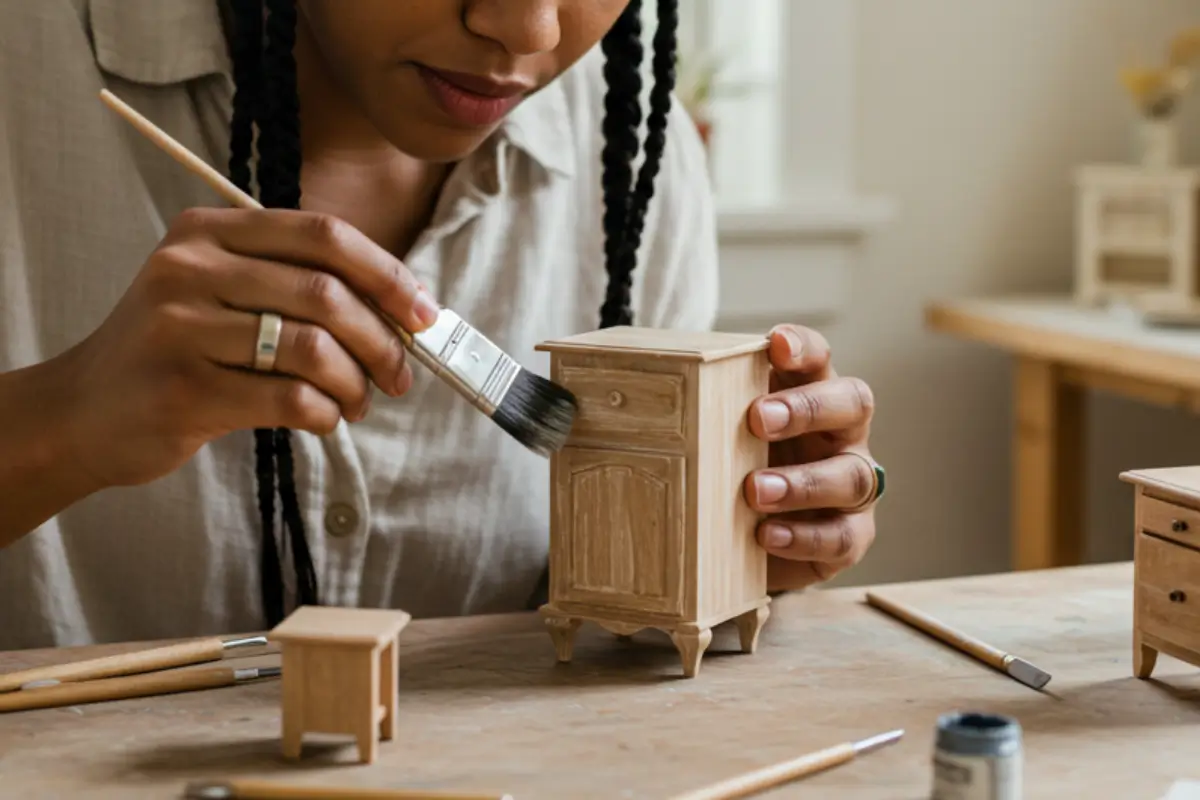
Professional miniature painting requires precision tools. Fine detail brushes are indispensable for reaching small corners and edges. Flat brushes are useful for smooth surfaces, while round brushes are ideal for decorative details.
Sponges can be used to create texture or soft color transitions. Toothpicks, cotton swabs, and even makeup brushes are often used for specialized effects. Using high-quality tools ensures better control and a cleaner finish.
Applying Paint the Professional Way
One of the most important rules in miniature painting is applying thin layers. Thick paint can obscure details and look unrealistic. Multiple thin coats produce a smoother and more professional result.
Each layer should be allowed to dry completely before applying the next. Brush strokes should be gentle and consistent, following the natural direction of the surface. Patience is key, as rushing the process often leads to visible mistakes.
Advanced Coloring and Shading Techniques
Professional miniature furniture painting goes beyond simple color application. Shading and highlighting add depth and realism. Dry brushing is a popular technique where a nearly dry brush is lightly dragged across raised details to highlight edges.
Washes, made by thinning paint with water, are used to darken crevices and add shadows. These techniques help emphasize textures and make miniature furniture appear more lifelike.
Creating Realistic Wood Effects
One of the most sought-after skills in dollhouse furniture painting is replicating real wood. This can be achieved by layering different shades of brown and beige, then using a fine brush to draw subtle wood grain lines.
A light wash can soften the effect and blend the colors naturally. This technique is especially effective on tables, chairs, cabinets, and floors, giving them a handcrafted and authentic appearance.
Antique and Vintage Painting Styles
Many dollhouse enthusiasts prefer antique or vintage furniture styles. Achieving this look involves controlled imperfections. Light sanding after painting can expose underlying layers, simulating worn edges.
Using muted or faded colors enhances the aged effect. Dark washes applied selectively create the illusion of dirt and age. These techniques give furniture a story and character, making it feel timeless rather than newly made.
Color Coordination Inside the Dollhouse
Professional painting also requires an understanding of color harmony. Furniture colors should complement the overall interior design of the dollhouse. Neutral tones create balance, while accent colors add interest without overwhelming the space.
Avoid overly bright or saturated colors unless they fit the theme. Thoughtful color coordination ensures that each piece contributes to a cohesive and realistic miniature environment.
Sealing and Protecting the Paintwork
Once painting is complete, sealing is essential to protect the finish. Varnishes come in matte, satin, and gloss finishes, each creating a different visual effect. Matte varnish is often preferred for realism, while gloss can be used for polished or modern furniture.
Applying a protective coat prevents chipping, fading, and damage from handling. This final step ensures the longevity of the miniature furniture.
Common Mistakes to Avoid
Many beginners make similar mistakes when painting miniature furniture. Using too much paint, skipping surface preparation, or rushing drying times can all lead to poor results. Another common error is using oversized brushes, which reduce control and precision. Being aware of these pitfalls helps improve skills and avoid frustration.
Tips for Beginners and Hobbyists
For those starting out, practice is essential. Working on test pieces builds confidence and technique. Observing real furniture for inspiration improves realism. Developing a personal style takes time, so experimentation is encouraged. With patience and dedication, anyone can achieve professional-level results in dollhouse furniture painting.
Conclusion
Professional dollhouse furniture painting and coloring is a blend of art, technique, and patience. From surface preparation to final sealing, every step contributes to the quality of the finished piece. Mastering these skills allows creators to elevate their miniature furniture, transforming small objects into detailed works of art. Whether for hobby, display, or content creation, professional painting techniques bring miniature worlds to life—one brushstroke at a time.